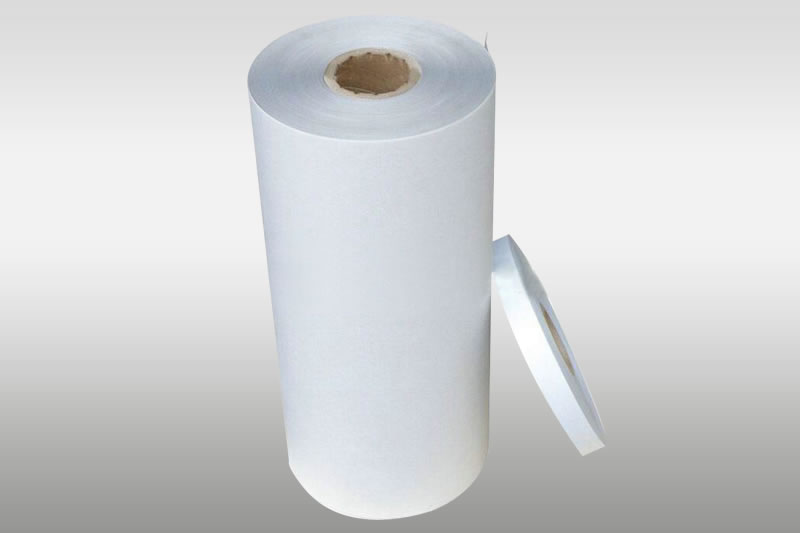
Application of Epoxy Fiberglass Winding Tubes in Composite-Housed Metal Oxide Surge Arresters
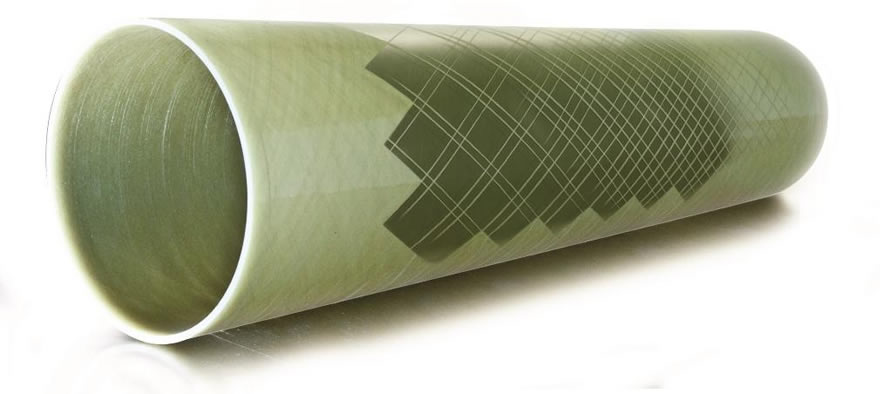
Epoxy fiberglass winding tubes, also known as fiberglass winding tubes or epoxy fiberglass tubes, are composite materials widely used in electrical insulation applications. In composite-housed metal oxide surge arresters, they can serve as internal insulating supports, structural reinforcement, or insulating frameworks, depending on the specific arrester design.
It is important to note that not all composite-housed surge arresters incorporate a separate epoxy fiberglass winding tube. Some designs consist of a silicone rubber housing, a fiberglass-reinforced resin tube, and zinc oxide (ZnO) varistor blocks, while others use different internal support structures.
1. Structure and Position Within a Surge Arrester
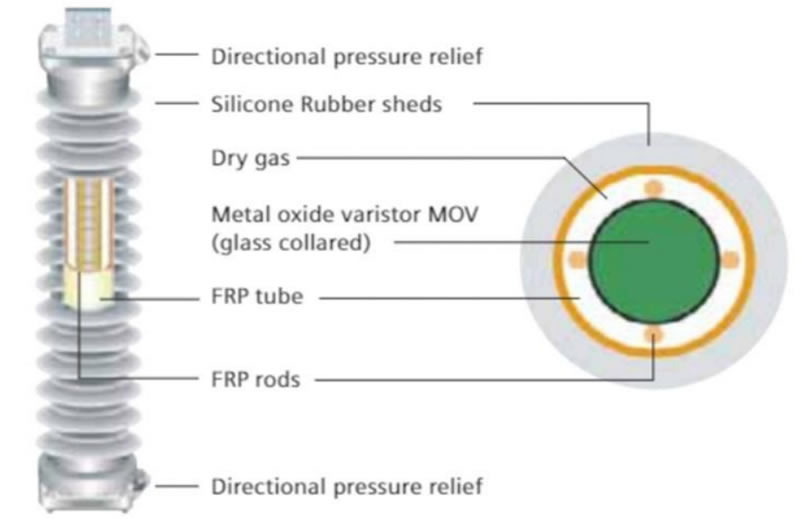
A typical composite-housed metal oxide surge arrester consists of the following components:
- External silicone rubber housing: Provides external insulation, weather resistance, pollution flashover resistance, and moisture protection.
- Zinc oxide (ZnO) varistor blocks: Limit overvoltage and absorb surge energy.
- Epoxy fiberglass winding tube or fiberglass-reinforced structural components: In designs incorporating these components, they provide internal support, mechanical reinforcement, or electrical insulation.
- Metal end flanges and connecting components: Provide electrical connections, mounting, and mechanical fixation.
Epoxy fiberglass winding tubes generally do not perform the primary overvoltage-limiting function. Instead, they contribute to the internal structural integrity and insulation system of the surge arrester.
2. Main Functions of Epoxy Fiberglass Winding Tubes
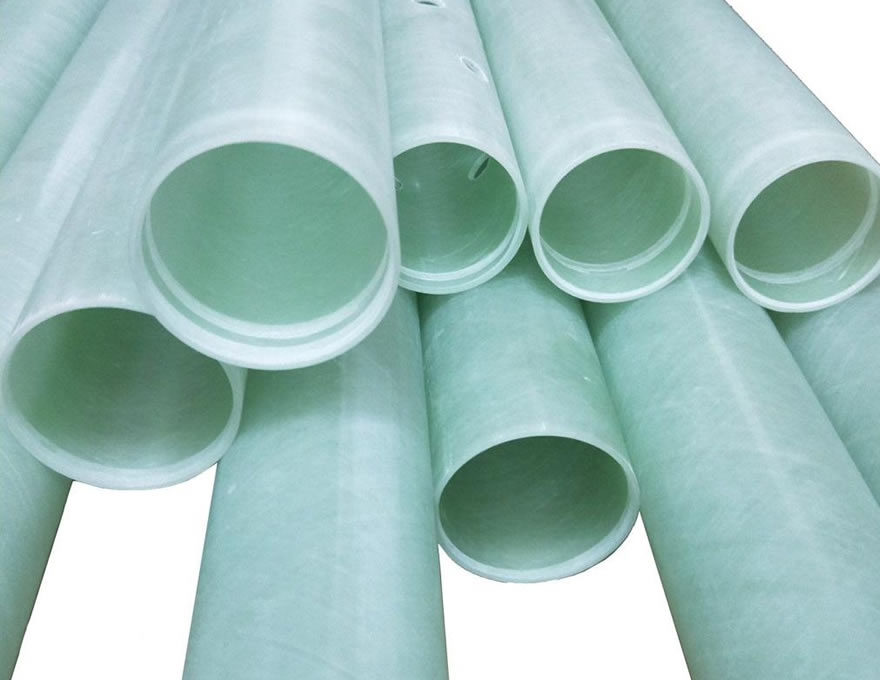
2.1 Mechanical Support and Structural Reinforcement
The combination of glass fibers and epoxy resin provides high axial and hoop strength. In tubular structures, epoxy fiberglass winding tubes can support internal varistor assemblies and end connection structures while withstanding the mechanical loads specified by the design.
2.2 Reinforcement of the Composite Housing
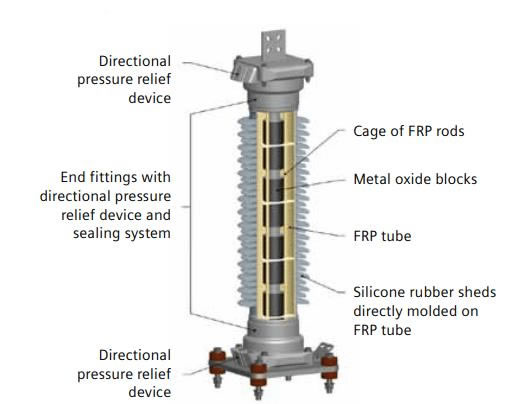
In hollow-tube surge arrester designs, a fiber-reinforced polymer (FRP) tube can serve as a load-bearing core tube. Silicone rubber sheds can then be molded onto or assembled around the tube to form the composite insulating housing.
2.3 Restraint and Protection of the Varistor Assembly
In filament-wound reinforced designs, epoxy-impregnated glass fibers may also be wound directly around the zinc oxide varistor column. This structure provides radial restraint and helps maintain the mechanical stability of the internal assembly.
This application differs from the use of a separate hollow fiberglass winding tube.
2.4 Electrical Insulation and Environmental Resistance
With a suitable epoxy resin system and glass fiber structure, these tubes can provide electrical insulation, heat resistance, and moisture resistance. Their actual performance depends on factors such as resin impregnation, curing quality, void control, interfacial bonding, and the overall sealing design of the finished product.
3. Manufacturing Processes and Quality Control
The manufacturing quality of epoxy fiberglass winding tubes directly affects their mechanical performance, electrical insulation properties, and long-term service reliability. To meet the requirements of high-voltage electrical equipment, particular attention should be paid to the following production and quality control processes.
3.1 Raw Material Selection
Select appropriate glass fibers, epoxy resins, and curing systems according to the intended operating environment and design requirements.
Raw materials should have consistent quality and traceability to ensure that their properties meet the specified mechanical, electrical, and thermal performance requirements.
3.2 Filament Winding Process Control
Fiber winding angle, tension, fiber placement, and interlayer bonding all influence the axial strength, hoop strength, and overall stiffness of the tube.
During production, the winding process should be optimized according to the loading directions and structural design. Uniform fiber distribution should be maintained while minimizing local fiber accumulation, dry fibers, and interlayer defects.
3.3 Resin Impregnation and Curing Control
The resin must adequately impregnate the glass fibers, and curing must be completed under specified process conditions.
Insufficient impregnation, abnormal resin content, or incomplete curing may compromise the mechanical strength and electrical insulation performance of the finished tube.
Therefore, the resin system, processing temperature, curing time, and other relevant process parameters should be effectively controlled.
3.4 Dimensional and Visual Inspection
Finished tubes should be inspected for inner diameter, outer diameter, wall thickness, length, straightness, and end-face quality in accordance with technical drawings and customer requirements.
Surface cracks, delamination, bubbles, visible voids, resin defects, and other abnormalities that could affect product performance should also be checked to ensure that the tubes meet assembly and service requirements.
3.5 Performance Verification
For surge arrester applications, appropriate mechanical, electrical, thermal, and environmental performance tests should be conducted according to the product design and applicable standards.
It is important to understand that passing inspection as an individual tube does not mean the complete surge arrester is qualified. The finished arrester must still undergo the required tests and verification procedures in accordance with its design and applicable standards.
4. Key Technical Considerations
The application of epoxy fiberglass winding tubes in composite-housed metal oxide surge arresters requires careful consideration of the following technical factors.
First, matching mechanical properties to the structural design. The winding configuration and wall thickness should be determined according to the actual loading directions, installation conditions, and overall product structure. An inappropriate design may result in localized stress concentrations or insufficient mechanical strength.
Second, internal defects and insulation reliability. Uneven resin impregnation, voids, cracks, and delamination may compromise electrical insulation and mechanical strength. Effective process control and quality inspection are therefore essential.
Third, compatibility between composite materials and interfaces. When the tube is used in combination with silicone rubber, metal fittings, or other insulating materials, attention should be paid to interfacial bonding, differences in thermal expansion, sealing design, and long-term environmental aging.
Fourth, long-term environmental performance. Outdoor surge arresters must withstand temperature variations, moisture, ultraviolet radiation, and pollution. Environmental performance and durability requirements should be determined according to the tube’s actual position within the complete arrester structure.
5. Manufacturer of Epoxy Fiberglass Winding Tubes
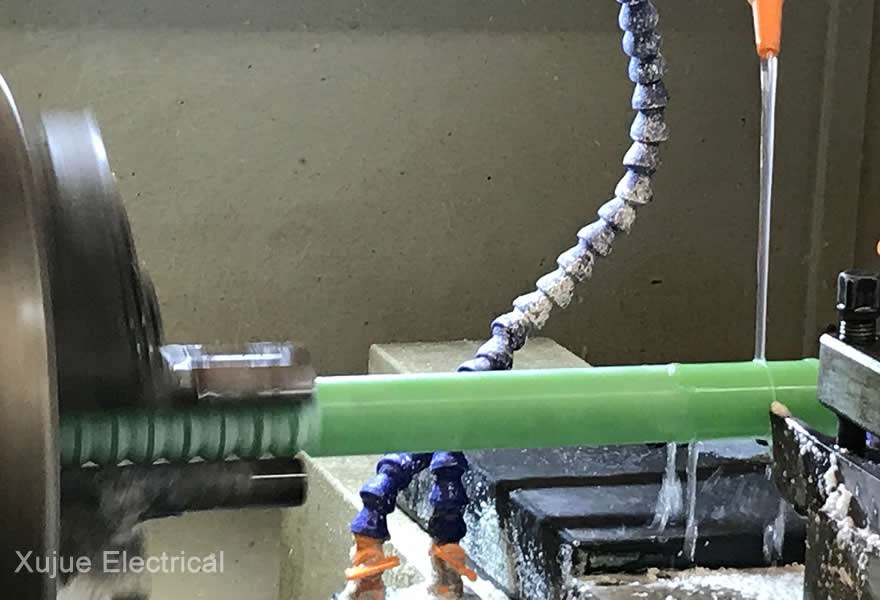
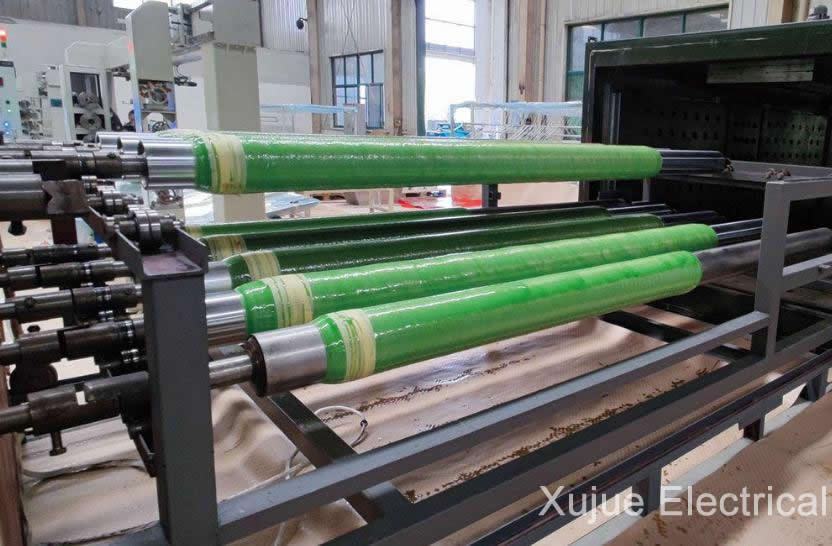
Xujue Electrical is a professional manufacturer of epoxy fiberglass winding tubes, with an automated fiberglass tube winding production facility.
We supply fiberglass winding tubes with diameters ranging from 10 mm to 800 mm and a Thermal Class H rating (180°C).
Based on the specific requirements of different surge arrester designs, we provide customized fiberglass winding tube solutions to meet customers’ dimensional, mechanical, and electrical insulation requirements.
For technical inquiries or customized solutions, please contact Xujue Electrical with your required tube dimensions, application details, and technical specifications.