FR4 Epoxy Fiberglass Sheets for CNC Machining Factories
FR4 epoxy fiberglass sheets used in CNC machining, including thickness tolerance, flatness, density, Tg, ESD properties, and quality standards.
Procurement Requirements for FR4 Epoxy Fiberglass Sheets Used by CNC Machining Factories
CNC (Computer Numerical Control) precision machining factories have specific procurement requirements for FR4 epoxy fiberglass sheets. Since this material is a composite made from woven glass fiber fabric impregnated with epoxy resin and laminated under heat and pressure, it is hard and abrasive during cutting. It can also be prone to delamination, burr formation, and other machining defects if the material quality is inadequate.
Therefore, in addition to conventional electrical and thermal properties, CNC machining factories pay particular attention to material uniformity, thickness tolerances, flatness, and machinability.
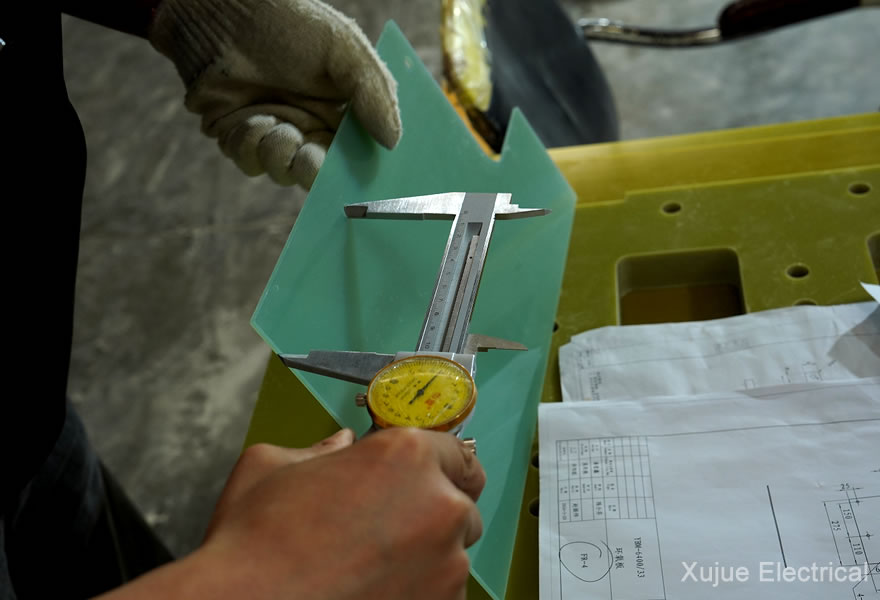
The following are the key procurement requirements for FR4 epoxy fiberglass sheets used in CNC machining.
1. Dimensional Accuracy and Thickness Tolerances
Thickness Tolerance
Uneven sheet thickness can result in inconsistent engraving depths and milling depths during CNC machining, particularly when manufacturing PCB fixtures, jigs, and test fixtures. Standard commercial sheets may have thickness tolerances of approximately ±0.15 mm, while precision machining applications often require double-side ground sheets with thickness tolerances controlled within ±0.05 mm.
Flatness and Warpage
The sheets must be sufficiently flat to ensure stable positioning and reliable machining. Warpage is generally expected to be controlled within 0.5%, depending on the sheet dimensions and the customer’s specifications. Excessive warpage can prevent the material from being properly secured against a CNC vacuum table, affecting drilling accuracy, machining depth, and finished part dimensions.
2. Internal Material Quality and Machining Performance
High Density and Void-Free Structure
The typical density of FR4 epoxy fiberglass sheets is approximately 1.8–2.0 g/cm³. The material should be free from internal voids, delamination, and foreign inclusions. If recycled resin or non-compliant glass fabric is used, high-speed CNC cutting may cause localized cracking, hole-wall delamination, whitening along machined edges, and excessive burr formation.
Uniform Resin Content and Glass Fiber Distribution
The woven glass fabric must be evenly distributed and thoroughly impregnated with epoxy resin. Significant variations in local hardness can compromise the mechanical strength of finished components, including flexural and tensile strength. They can also cause premature chipping or accelerated wear of precision cutting tools, such as carbide milling cutters and micro-drills.
3. Electrical and Thermal Properties
Flame Retardancy
Flame retardancy is a key characteristic of FR4 materials. CNC machining factories commonly require suppliers to provide documentation demonstrating compliance with UL 94 V-0, such as a flame-retardancy certificate or a third-party test report, when specified by the application.
Glass Transition Temperature (Tg)
The required glass transition temperature depends on the operating environment of the finished components. Buyers should distinguish between the following material grades:
- Standard Tg: approximately 130–140°C
- Medium Tg: approximately 150°C
- High Tg: approximately 170–180°C or higher
High-Tg materials generally offer better dimensional stability under elevated temperatures encountered during machining and subsequent assembly, depending on the material formulation and processing conditions.
Anti-Static Properties (When Applicable)
For semiconductor test fixtures, electronic manufacturing carriers, and other applications requiring electrostatic control, buyers may specify ESD FR4 sheets. The required surface resistance and volume resistance must be clearly defined. A resistance range of 106–109 Ω may be specified for certain applications, but the actual acceptance criteria should be confirmed with the customer based on the intended use and applicable ESD requirements.
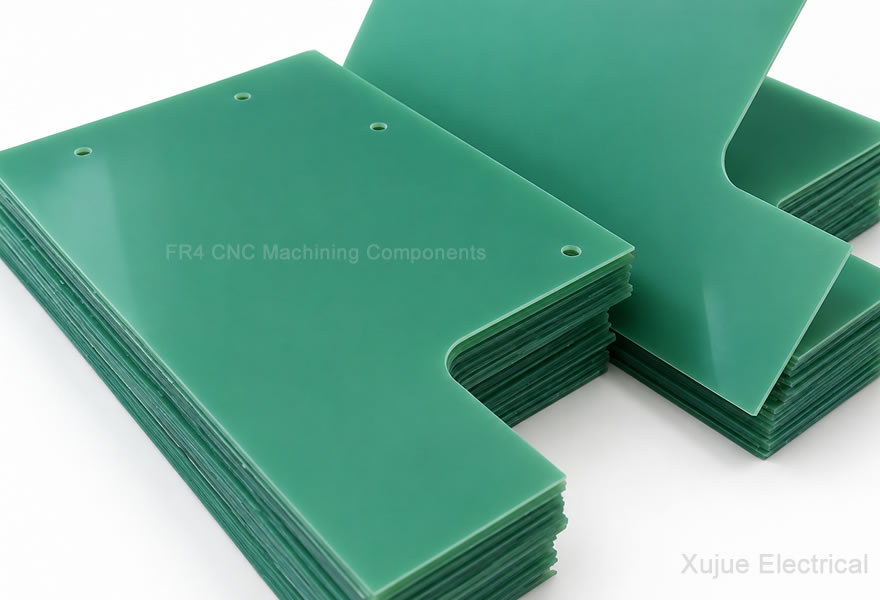
4. Appearance and Batch-to-Batch Consistency
Surface Quality
The sheet surface should be smooth and flat, without obvious scratches, bubbles, wrinkles, cracks, stains, or other visible defects that could affect machining quality or the appearance of finished parts.
Color Consistency
Common FR4 sheet colors include water green, yellow, and black. Color should remain consistent throughout each batch. Different colors may correspond to different formulations or material grades, particularly for black and water-green sheets. Therefore, materials should not be mixed or substituted solely on the basis of appearance; the grade and technical specifications must be verified.
Environmental Compliance and Certifications
Depending on the end-use application and customer requirements, suppliers may be required to provide relevant environmental compliance documentation, such as RoHS and REACH declarations, as well as applicable UL recognition or certification documents.
Conclusion
For CNC machining factories, purchasing FR4 epoxy fiberglass sheets involves more than selecting a standard electrical insulation material. Consistent thickness, excellent flatness, uniform internal structure, reliable mechanical properties, and stable machining performance are essential factors in reducing machining defects, improving production efficiency, and maintaining the dimensional accuracy of finished components.
When selecting an FR4 sheet supplier, buyers should confirm the required dimensions, thickness tolerances, material grade, Tg value, flame-retardancy rating, ESD requirements (if applicable), and relevant test documentation before placing a bulk order.
Leave us a message to get quotation and sample!
If you are interested in our products,, please send us a message and we will contact you as soon as we receive it. Email: info@ztaero.com whatsApp: +8616650273778
Releated News
- 10-12 2026FR4 Epoxy Fiberglass Sheets for CNC Machining Factories
- 10-10 2026Transformer Pressboard
- 10-09 2026Epoxy Fiberglass Filament-Wound Tubes for Transformer Core Winding Insulation
- 09-28 2026Transformer Kraft Paper vs. Thermally Upgraded Paper
- 09-28 2026Xujue Electrical Exhibits at Data Centre World Singapore 2026
- 09-22 2026Xujue Electrical Exhibits at Enlit Asia 2026