Fiberglass Filament Wound Tubes for OLTC Transformer Insulation
How fiberglass filament wound tubes are used in OLTC systems as insulating cylinders, support tubes, and sleeves for oil-immersed power transformers.
Application of Fiberglass Filament Wound Tubes in Transformer On-Load Tap Changers (OLTC)
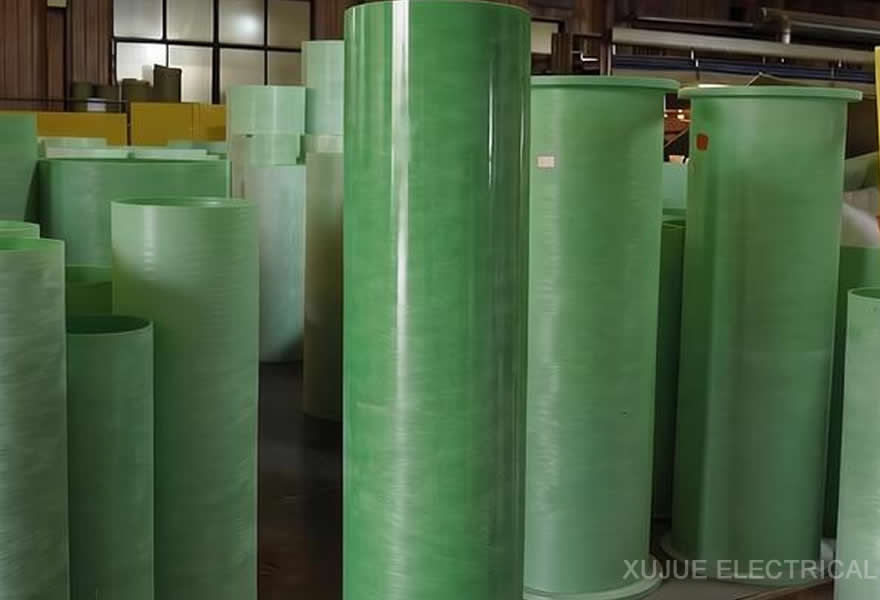
Epoxy Fiberglass Filament Wound Tube is a high-performance electrical insulation composite material manufactured from continuous glass fibers and epoxy resin through filament winding, curing, and other processes.
With excellent electrical insulation properties, high mechanical strength, thermal resistance, and dimensional stability, fiberglass filament wound tubes can be used in On-Load Tap Changers (OLTCs) of oil-immersed power transformers as insulating cylinders, support tubes, insulating sleeves, and other structural insulation components.
1. What Is an On-Load Tap Changer (OLTC)?
An On-Load Tap Changer (OLTC) is a voltage regulation device installed in a transformer. It can change the transformer turns ratio by switching between different tap positions of the transformer winding while the transformer is operating under load, thereby regulating the output voltage.
OLTCs are mainly used in:
- Oil-immersed power transformers
- Large-capacity power transformers
- Autotransformers
- Converter transformers
- Some large industrial power transformers
A typical OLTC system consists of a tap selector, diverter switch, electrical contacts, tap leads, insulation structures, and operating mechanism.

2. Where Are Fiberglass Filament Wound Tubes Used in an OLTC?
Inside an OLTC, fiberglass filament wound tubes are typically used as insulating cylinders, support tubes, or insulating sleeves. They provide both electrical insulation and mechanical support.
① OLTC Insulating Cylinder
This is one of the important applications of fiberglass filament wound tubes in OLTC systems.
Fiberglass filament wound tubes can be machined into insulating cylinders and installed inside the tap changer to electrically isolate conductive components at different electrical potentials.
Their main functions include:
Electrical Insulation + Mechanical Support
The insulating cylinder must provide sufficient insulation distance between conductive components while also withstanding mechanical loads generated during operation.
② Insulating Support for the Tap Selector
A tap selector typically contains multiple tap contacts at different electrical potentials.
Fiberglass filament wound tubes can be used as insulating and supporting structures to maintain the correct and stable positioning of the contacts.
For high-voltage transformers, the dielectric strength, dimensional stability, and mechanical strength of the insulation structure are particularly important.
③ Insulating Sleeves for Conductive Rods and Connecting Components
Inside an OLTC, certain conductive rods, connecting rods, and metal components need to be electrically isolated from surrounding structures.
Fiberglass filament wound tubes can be machined into:
- Insulating Tubes
- Insulating Sleeves
- Support Tubes
- Insulating Cylinders
These components can provide reliable electrical insulation and mechanical protection for internal OLTC components.
3. Main Functions of Fiberglass Filament Wound Tubes in OLTCs
In simple terms:
Fiberglass filament wound tubes are not only electrical insulation materials for OLTCs, but also important mechanical support components.
In practical applications, they mainly need to meet three key requirements:
① Electrical Insulation
Prevent electrical breakdown between components at different electrical potentials and between different tap positions.
② Mechanical Support
Maintain the stable position of contacts, conductive rods, and other internal components during transformer operation and tap-changing cycles.
③ Long-Term Reliability
Maintain stable electrical, mechanical, and dimensional properties under long-term exposure to transformer oil, temperature variations, mechanical operation, and electrical stress.
4. Why Are Fiberglass Filament Wound Tubes Suitable for OLTC Applications?
One of the key advantages of fiberglass filament wound tubes is their continuous glass fiber reinforced structure.
Unlike conventional plastic insulation tubes, whose mechanical strength mainly comes from the resin matrix, fiberglass filament wound tubes use:
Continuous Glass Fiber + Epoxy Resin
to form a reinforced composite structure.
This material structure provides a balanced combination of properties, including:
Electrical Insulation + Mechanical Strength + Thermal Resistance + Dimensional Stability
These characteristics make fiberglass filament wound tubes suitable for insulation and structural support applications inside OLTC systems.
5. What Types of Transformers Use On-Load Tap Changers?
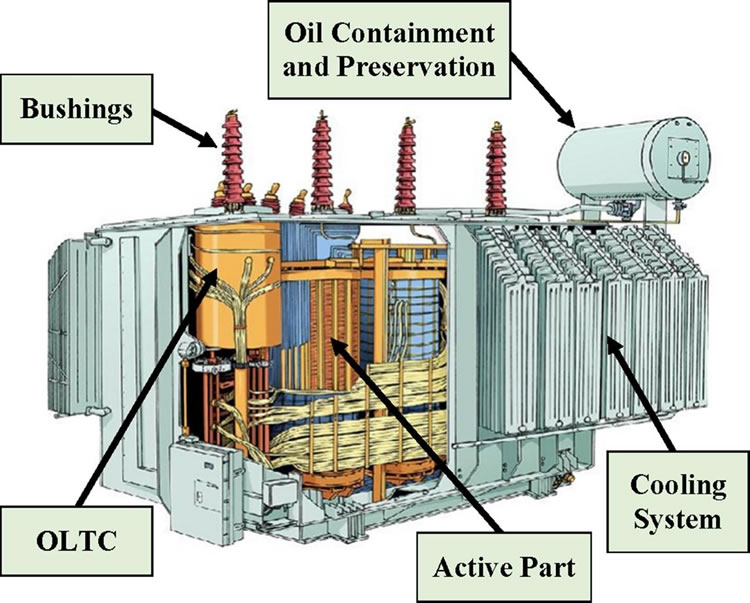
On-Load Tap Changers (OLTCs) are primarily used in power transformers that require voltage regulation while operating under load. The most typical applications are oil-immersed power transformers, especially medium- and high-voltage, large-capacity transformers used in power transmission, substations, and distribution systems.
Main Transformer Types Using OLTCs
| Transformer Type | OLTC Application | Typical Applications |
|---|---|---|
| Oil-Immersed Power Transformer | ⭐⭐⭐⭐⭐ | Power transmission, substations, and grid voltage regulation |
| Oil-Immersed Distribution Transformer | ⭐⭐ | Selected applications requiring continuous voltage regulation |
| Autotransformer | ⭐⭐⭐⭐⭐ | High-voltage and ultra-high-voltage power grids |
| Converter Transformer | ⭐⭐⭐⭐ | HVDC transmission systems |
| Industrial Power Transformer | ⭐⭐⭐ | Voltage regulation in large industrial power systems |
| Dry-Type Transformer | ⭐ | Less common; OLTC applications are relatively limited |
| Conventional Distribution Transformer | ⭐ | Usually uses an off-circuit/de-energized tap changer rather than an OLTC |
Conclusion
Oil-immersed power transformers are the most common transformer type equipped with OLTC systems.
Within these OLTC systems, epoxy fiberglass filament wound tubes can be used as insulating cylinders, support tubes, and insulating sleeves, providing both high electrical insulation performance and mechanical support.
With their combination of high dielectric strength, mechanical strength, thermal resistance, good compatibility with transformer oil, and dimensional stability, fiberglass filament wound tubes are suitable for demanding insulation and structural applications in high-voltage and large-capacity transformers.
Leave us a message to get quotation and sample!
If you are interested in our products,, please send us a message and we will contact you as soon as we receive it. Email: info@ztaero.com whatsApp: +8616650273778
Releated News
- 10-22 2026Epoxy Fiberglass Winding Tubes in Composite-Housed Metal Oxide Surge Arresters
- 10-20 2026FR4 Insulation Barriers: Applications in Electrical Equipment
- 10-16 2026Epoxy Fiberglass Laminates in Europe: Trends & Applications
- 10-13 2026How to Choose DDP Insulation Paper for Oil-Immersed Transformers?
- 10-12 2026FR4 Epoxy Fiberglass Sheets for CNC Machining Factories
- 10-10 2026Transformer Pressboard