Selection of G11 Slot Wedges and Epoxy Sheets in Motors and Generators
G11 slot wedges are crucial mechanical and electrical s […]
G11 slot wedges are crucial mechanical and electrical structural components in electric motors (including industrial motors and generators). They are primarily embedded in the stator or rotor core slots, their core function being to securely lock the coils within the slots, preventing physical displacement, wear, or insulation arcing during motor operation.
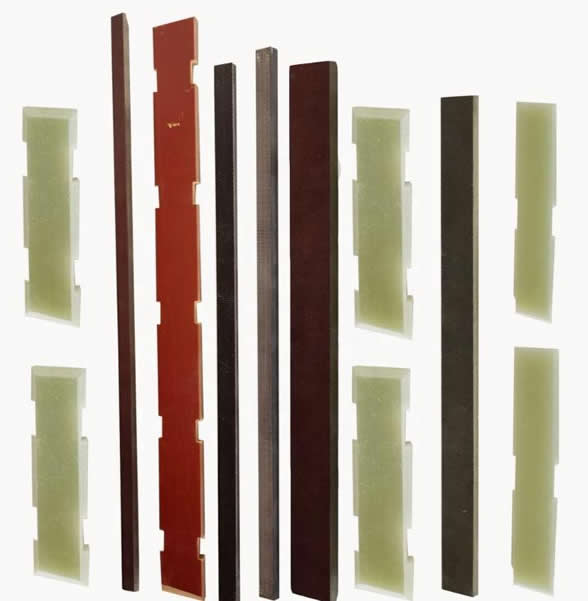
I. Core Applications of G11 Slot Wedges in Electric Motors
G11 (epoxy fiberglass laminate) slot wedges are mainly used in the stator and rotor slots of high-voltage motors, high-power medium and large-sized motors, traction motors, and wind turbines.
Mechanical Locking: Prevents high-frequency vibration of the coils due to electromagnetic alternating stress, preventing wear of the coil insulation layer.
Centrifugal Force Resistance: Directly withstands the enormous centrifugal force generated by high-speed rotation in the rotor slots, locking the windings.
Electrical Insulation: Blocks surface creepage between the coils and the core slots, preventing high-voltage breakdown.
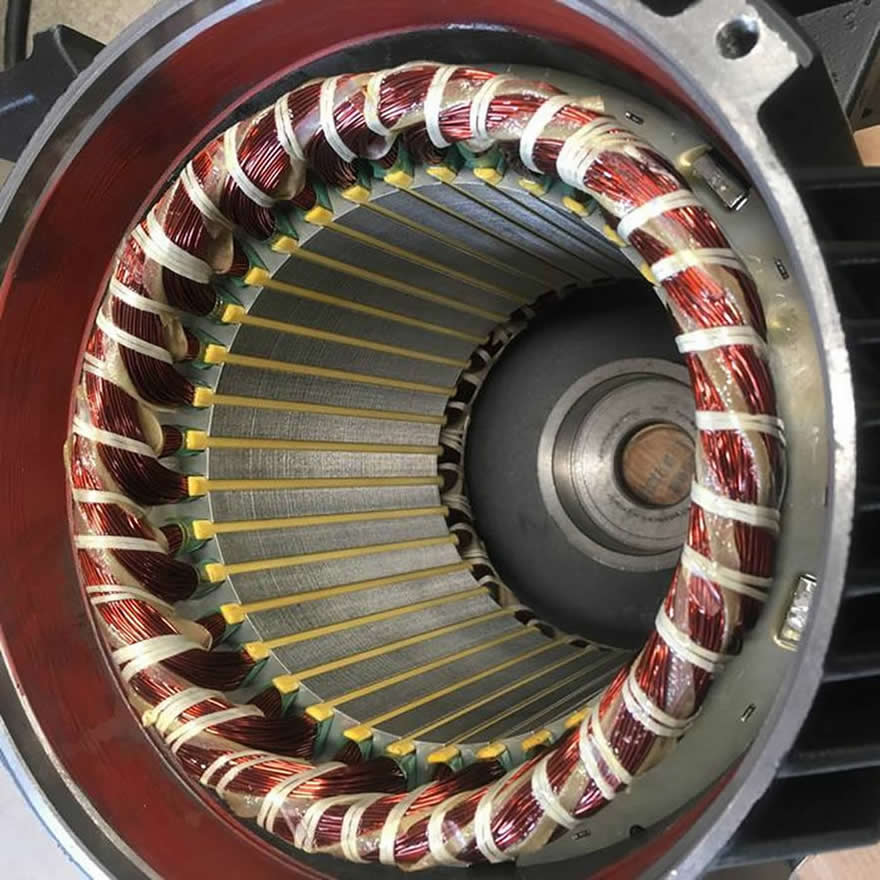
II. Core Selection Factors for G11 Slot Wedges
Selection must strictly match the motor’s electrical, thermal, and mechanical design parameters, primarily considering the following five dimensions:
1. Heat Resistance Grade Selection (Most Critical Indicator)
Motors generate significant heat during operation, and slot wedges must maintain mechanical strength under prolonged high temperatures.
Selection Standard: G11 belongs to the F (155℃) to H (180℃) heat-resistant material category.
Core Parameter: High-temperature flexural strength retention rate must be assessed. Standard G11 requires that its flexural strength remain above 50% of its room-temperature strength at 150℃.
Matching: If the motor is designed with an F or H class insulation system (e.g., insulating varnish, mica tape is F/H class), G11 must be selected; if it is B class (130℃), G10 or 3240 can be used as a downgrade to reduce costs.
2. Mechanical Strength Selection (Impact Resistance and Loosening Prevention)
The slot wedge needs to withstand impact forces when driven into the slot and electromagnetic forces during operation.
Room Temperature Bending Strength: Longitudinal bending strength should be required during selection.
Impact Resistance: Ensure the slot wedge does not delaminate, chip, or break during the installation process.
Creep Resistance: Ensure the material does not undergo plastic deformation under long-term compression, preventing loosening after long-term operation.
3. Geometric Shape and Size Selection
The slot wedge must perfectly match the slot shape of the motor core. Common cross-sectional shapes include:
Rectangular/Flat Slot Wedge: Used for ordinary open slots.
Trapezoidal/Dovetail Slot Wedge: Used for chamfered slots, locked by the dovetail bevel for more stable force distribution.
Convex/Stepped Slot Wedge: Used for positioning specific double-layer windings.
Tolerances: Thickness and width tolerances are typically required to be controlled within ±0.05 to ±0.1 mm. Excessive tolerance leads to difficulty in driving in or excessive looseness, while insufficient tolerance results in insufficient clamping force.
4. Selection of Standard vs. Magnetic Slot Wedges
Based on motor efficiency and temperature rise requirements, G11 slot wedges are available in two material orientations:
Standard G11 Slot Wedges (Non-Magnetic): Used in conventional motors.
G11 Magnetic Slot Wedges (Modified): Contains reduced iron powder added to epoxy resin.
Applicable Scenarios: High-voltage, high-efficiency motors, permanent magnet motors.
Selection Benefits: Reduces motor cogging effect, reduces no-load loss (can reduce no-load loss by 20%-50%), reduces motor temperature rise, and suppresses electromagnetic noise. Magnetic permeability must be additionally assessed during selection.
5. Electrical and Environmental Adaptability Selection
Dielectric Strength: Electrical insulation performance does not degrade under continuous high temperatures.
Water Absorption Rate: The water absorption rate should be <0.12% when selecting a motor. For motors operating in humid, offshore wind power, or high-humidity and high-heat environments, a low water absorption rate ensures that the slot wedges do not absorb moisture, develop mold, or reduce insulation resistance after condensation during shutdown.
III. Quick Reference Table for Selection and Configuration
| Motor Type | Selection Recommendation | Key Performance Indicators |
|---|---|---|
| Standard Industrial Medium Motors (Class F) | Standard G11 Trapezoidal/Rectangular Wedges | Flexural strength (ambient/high temp), Dimensional tolerance |
| High-Power / High-Voltage Efficient Motors | Modified G11 Magnetic Slot Wedges | Relative magnetic permeability, High-temperature mechanical strength |
| Hydro / Wind Generators (Class H) | High-performance Class H G11 Wedges | Low water absorption, Moisture/heat resistance, Anti-fungal property |
| Explosion-Proof / Traction Motors | Toughened G11 Slot Wedges | Impact strength, Fatigue resistance under frequent start/stop cycles |
Leave us a message to get quotation and sample!
If you are interested in our products,, please send us a message and we will contact you as soon as we receive it. Email: info@ztaero.com whatsApp: +8616650273778
Releated News
- 10-13 2026How to Choose DDP Insulation Paper for Oil-Immersed Transformers?
- 10-12 2026FR4 Epoxy Fiberglass Sheets for CNC Machining Factories
- 10-10 2026Transformer Pressboard
- 10-09 2026Epoxy Fiberglass Filament-Wound Tubes for Transformer Core Winding Insulation
- 09-28 2026Transformer Kraft Paper vs. Thermally Upgraded Paper
- 09-28 2026Xujue Electrical Exhibits at Data Centre World Singapore 2026