How Should Motor Manufacturers Choose Between NHN and NMN Insulation Materials?
How Should Motor Manufacturers Choose Between NHN and N […]
How Should Motor Manufacturers Choose Between NHN and NMN Insulation Materials?
In the manufacturing of motors, generators, and new energy vehicle (NEV) traction motors, insulation materials may not be core structural components, but they play a critical role in the insulation performance, thermal resistance, operational reliability, and service life of the winding system. For motor manufacturers, selecting the right insulation material according to actual operating conditions is an important part of motor design and production.
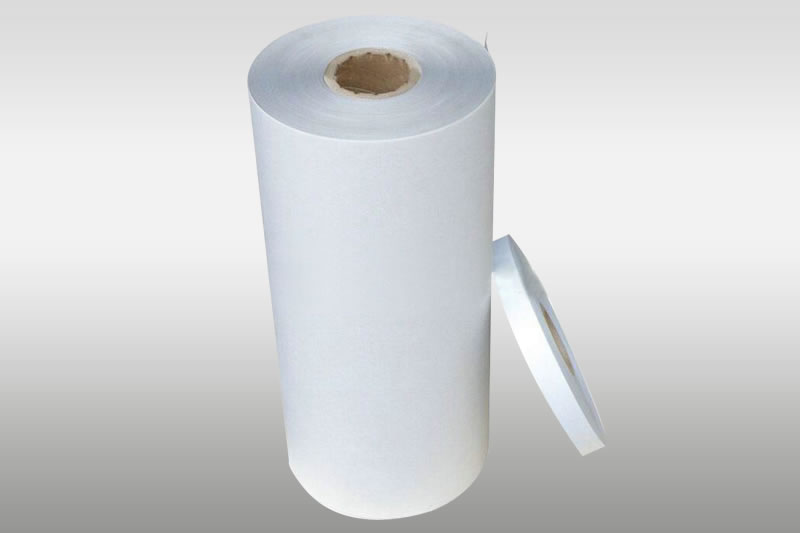
Among the many flexible composite insulation materials available, NMN and NHN insulation materials are widely used. Both can be applied to motor slot insulation, phase-to-phase insulation, interlayer insulation, and other insulation applications. Although their appearance and structure are similar, their different intermediate film materials result in significant differences in thermal resistance, application range, and cost.
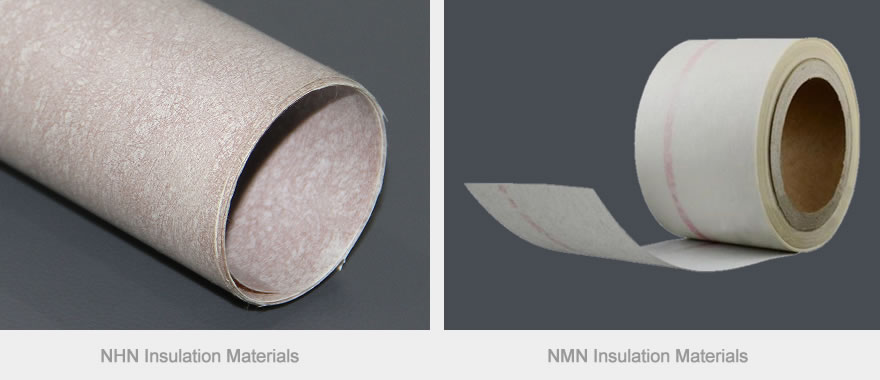
So, should motor manufacturers choose NHN or NMN?
The answer is not simply which material is “better,” but which material is more suitable for the motor’s insulation system and operating environment.
1. What Is the Difference Between NHN and NMN Insulation Materials?
| Comparison | NMN 6640 | NHN 6650 |
|---|---|---|
| Material Structure | Nomex + PET + Nomex | Nomex + PI + Nomex |
| Intermediate Film | Polyester (PET) Film | Polyimide (PI) Film |
| Typical Temperature Class | Class F | Class H |
| Temperature Rating | 155°C | 180°C |
| High-Temperature Stability | ★★★★ | ★★★★★ |
| Electrical Performance | ★★★★ | ★★★★★ |
| Mechanical Performance | ★★★★☆ | ★★★★☆ |
| Flexibility | ★★★★★ | ★★★★☆ |
| Processability | ★★★★★ | ★★★★☆ |
| Cost | Lower | Higher |
| Cost Performance | High | Higher for high-temperature applications |
| Standard Industrial Motors | Recommended | Optional |
| Class H Motors | Optional | Recommended |
| Generators | Optional | Recommended |
| NEV Traction Motors | Depends on the insulation system | Recommended for high-temperature applications |
| High-Reliability Equipment | General applications | Recommended |
2. Temperature Class Should Be the First Consideration for Motor Manufacturers
For electrical insulation materials, temperature class is one of the most important parameters when selecting insulation materials.
Common motor insulation systems include Class B, Class F, and Class H:
- Class B: 130°C
- Class F: 155°C
- Class H: 180°C
As motor power density continues to increase, particularly with the development of NEV traction motors, high-speed motors, and inverter-driven motors, the internal temperature rise and thermal load of motors are also increasing. This places higher demands on the thermal resistance and long-term reliability of insulation materials.
Therefore, before choosing between NMN and NHN, motor manufacturers should first determine:
What is the required insulation system temperature class of the motor?
If the motor uses a Class F insulation system and operates within a normal temperature range, NMN can often be a highly competitive choice.
If the motor is designed for a Class H insulation system and requires a greater thermal margin, particularly under high-temperature, high-speed, or high-load operating conditions, NHN is generally the more suitable option.
This is why NMN is commonly used in mainstream Class F and certain high-performance motors, while NHN is more frequently selected for Class H motors, high-temperature applications, and equipment requiring a higher level of reliability.
3. NMN: A Cost-Effective Choice for Most Mainstream High-Performance Motors
One of the key advantages of NMN insulation material is its ability to achieve a good balance between performance, processability, and cost.
NMN typically uses a polyester (PET) film as the intermediate layer, with Nomex® aramid paper on both sides. This structure provides good flexibility, mechanical strength, and electrical insulation performance.
During motor manufacturing, NMN can be used for a variety of applications, including:
- Stator slot insulation (slot liner)
- Slot closure and auxiliary slot-wedge insulation
- Phase-to-phase insulation
- Interlayer insulation
- Winding insulation
- Coil auxiliary insulation
For standard industrial motors, compressor motors, inverter-driven motors, and many Class F motor applications, NMN can generally meet the required insulation performance.
For motor manufacturers producing large volumes, NMN also offers an important cost-control advantage. When the required insulation performance, temperature rating, and service life can be achieved with NMN, there is often no need to use the more expensive NHN simply to obtain a higher temperature capability.
Therefore, if your motor features:
Class F insulation + conventional industrial operating conditions + cost sensitivity + high-volume production
then NMN is often worth evaluating as the preferred solution.
4. NHN: Designed for High-Temperature, High-Load, and High-Reliability Motors
The major structural difference between NHN and NMN is the intermediate film.
In NHN, the PET polyester film used in NMN is replaced by polyimide (PI) film.
Polyimide offers excellent high-temperature resistance and maintains stable electrical and mechanical properties under demanding thermal conditions. As a result, NHN is particularly suitable for applications where thermal resistance and long-term reliability are critical.
NHN is commonly considered for motors such as:
- Class H motors
- High-speed motors
- NEV traction motors
- High-power-density motors
- High-temperature industrial motors
- Special-purpose motors
- High-reliability generators
In NEV traction motors and high-performance inverter-driven motors, the insulation system may be exposed to high rotational speeds, high power density, frequent start-stop cycles, rapid temperature changes, and other demanding operating conditions.
These applications place higher requirements on the motor insulation system, making NHN an important option for many high-performance motor designs.
For motor manufacturers whose design targets include Class H insulation, high operating temperatures, or a greater thermal safety margin, NHN is generally more appropriate than standard NMN.
5. NHN and NMN Are Not Simply a Matter of Which One Is “Better”
A common misconception during material selection is:
“NHN has a higher temperature rating, so every motor should use NHN.”
This is not necessarily correct.
The selection of insulation materials should always be based on the overall motor insulation system design.
If a standard Class F industrial motor can achieve the required temperature rise, insulation life, and mechanical performance using NMN, replacing NMN with NHN may not provide enough additional value to justify the higher material cost.
On the other hand, if the motor operates at elevated temperatures or requires an exceptionally high level of reliability, choosing NMN solely to reduce material costs may increase the thermal aging risk of the insulation system.
Therefore, the correct material-selection principle should be:
“Meet the required performance first, then optimize material cost.”
The goal should not simply be to select the lowest-cost insulation material, but to achieve the best balance between insulation performance, reliability, and total material cost.
6. How Can Motor Manufacturers Quickly Choose Between NMN and NHN?
Based on typical motor manufacturing requirements, the selection can be summarized as follows:
| Motor Application / Requirement | Recommended Material |
|---|---|
| Standard industrial motors | NMN |
| Class F motors | NMN – priority evaluation |
| High-volume, cost-sensitive motors | NMN |
| Inverter-driven motors | NMN / NHN, depending on temperature and insulation system requirements |
| High-temperature motors | NHN |
| Class H motors | NHN – priority evaluation |
| High-speed motors | NHN – priority evaluation |
| NEV traction motors | NHN / NMN, depending on design requirements |
| High-power-density motors | NHN – priority evaluation |
| Motors requiring extremely high long-term reliability | NHN |
It is important to emphasize that this table should only be used as a preliminary material-selection guide.
The final selection should be confirmed based on the motor’s temperature rise, insulation system, operating voltage, mechanical processing requirements, application environment, and the technical data provided by the insulation material manufacturer.
Xujue Electrical Provides NHN and NMN Motor Insulation Solutions
As a professional manufacturer of electrical insulation materials, Xujue Electrical has extensive experience supplying flexible composite insulation materials for motors, generators, transformers, and new energy vehicle applications.
We provide a range of products including NMN, NHN, and other customized composite insulation materials. Materials can be customized according to the customer’s motor design, insulation temperature class, thickness, width, and processing requirements.
For motor manufacturers, we provide not only standard insulation materials but also technical support for material selection based on specific application requirements, including:
NMN vs. NHN selection → Sample testing → Specification confirmation → Slitting → Die-cutting/Forming → Mass production
If you are looking for NMN or NHN insulation materials for motors, generators, or NEV traction motors, please contact us and provide your motor model, insulation class, material thickness, dimensions, and specific application location.
Our team can recommend a suitable insulation material based on your actual operating conditions and provide free samples for testing. After the material meets your technical requirements, we can proceed with customized mass production, helping motor manufacturers achieve a better balance between insulation performance, product reliability, and procurement cost.
Leave us a message to get quotation and sample!
If you are interested in our products,, please send us a message and we will contact you as soon as we receive it. Email: info@ztaero.com whatsApp: +8616650273778
Releated News
- 10-12 2026FR4 Epoxy Fiberglass Sheets for CNC Machining Factories
- 10-10 2026Transformer Pressboard
- 10-09 2026Epoxy Fiberglass Filament-Wound Tubes for Transformer Core Winding Insulation
- 09-28 2026Transformer Kraft Paper vs. Thermally Upgraded Paper
- 09-28 2026Xujue Electrical Exhibits at Data Centre World Singapore 2026
- 09-22 2026Xujue Electrical Exhibits at Enlit Asia 2026