G11 (EPGC203) insulation sheet for Generators and Large Motors
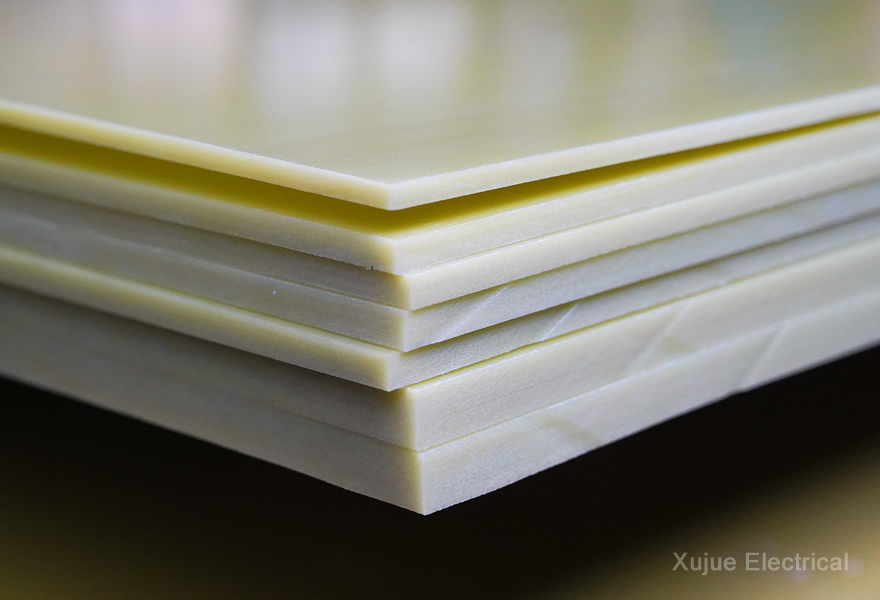
G11 EPGC-203 insulation sheet for large motors and generators. High mechanical strength, thermal stability and machinability for critical insulation components.
G11 (EPGC-203) for Generators and Large Rotating Electric Motors
In generators and large rotating electric motors, G11 (EPGC-203) is a highly utilized and critical material for primary insulation and structural support.During operation, large electric motors are subjected to severe electromagnetic vibrations, massive centrifugal forces, and high-intensity thermal cycles.Standard laminates such as G10 or FR4 can experience a significant reduction in mechanical strength at elevated temperatures, which may lead to loose coils or insulation failure.
Thanks to its ability to retain high mechanical strength at elevated temperatures ranging from 150°C to 180°C, corresponding to Class F to Class H insulation applications, EPGC-203 is widely used as a core insulation and structural material for high-power electric motors and generators.
Analysis of Core Application Components
1. Slot Wedges — The Most Critical Application
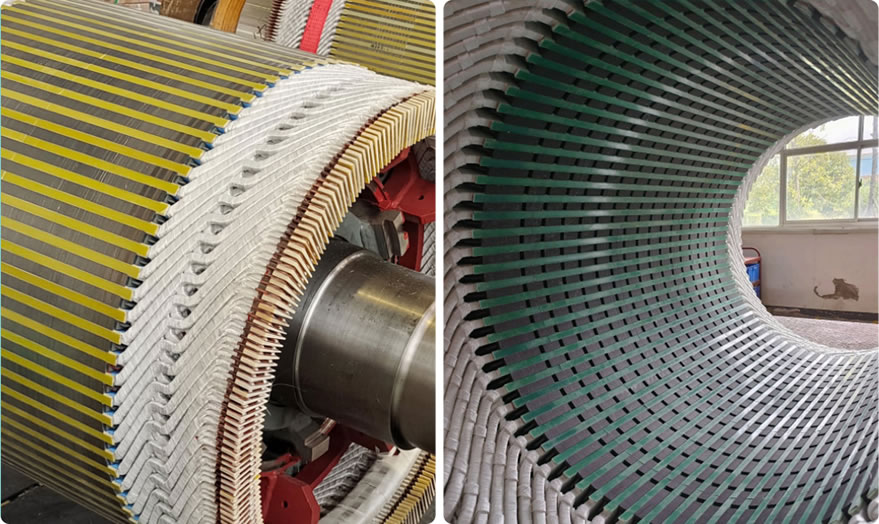
Role: Slot wedges act as mechanical locks that confine and secure the coils embedded within the slots of the stator or rotor iron cores.
Why EPGC-203 is selected:
When a motor starts or operates under high load, the coils are subjected to significant electromagnetic forces and centrifugal forces.
Machined into trapezoidal or other custom profiles, EPGC-203 slot wedges provide high shear and flexural strength.
This helps prevent coil movement during long-term operation under high-temperature vibration while also providing resistance to chemical attack from insulating varnishes.
2. Stator End-Winding Support Insulators
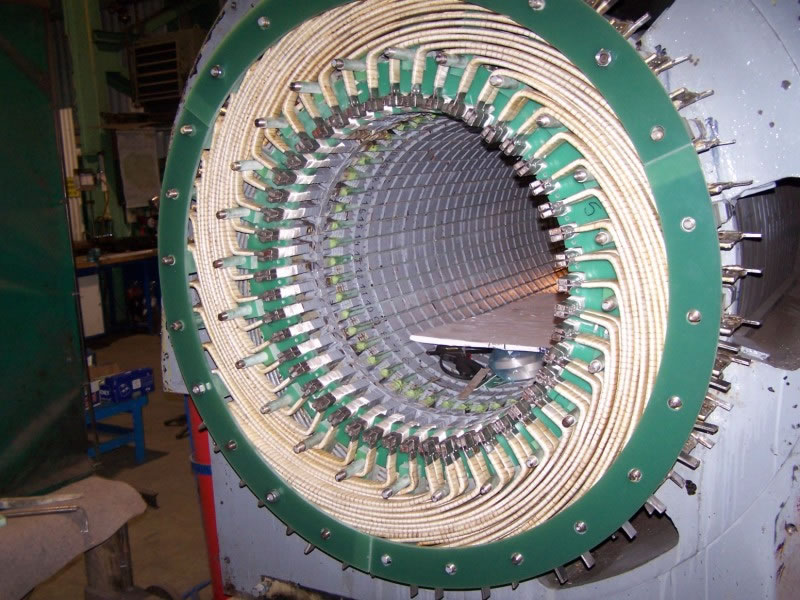
Role:EPGC-203 is used to secure the ends of stator coils that extend beyond both sides of the iron core.
Typical components include end blocks, support rings, and clamping rings.
Why EPGC-203 is selected:
During a sudden short circuit in a large generator, the end windings can experience substantial mechanical shock caused by electromagnetic forces.
The high impact strength and creep resistance of EPGC-203 help keep the end windings firmly positioned and reduce coil movement, insulation wear, and vibration-related chafing.
3. Rotor Insulation Components
Role:Typical applications include rotor end plates, rotor flange insulation sheets, and rotor slot liners.
Why EPGC-203 is selected:
The rotor is a high-speed rotating component that is subjected to significant axial and tangential centrifugal forces.
EPGC-203 provides high compressive strength at elevated temperatures, helping maintain the dimensional stability and mechanical integrity of insulation structures during high-speed rotation.
4. Lead Boxes and Terminal Boards
Role:EPGC-203 can be used for clamping plates, insulation supports, and main terminal boards used to secure high-voltage lead-out wires.
Why EPGC-203 is selected:
Generator terminals may operate under high-voltage and high-current conditions and can be exposed to humid or oil-mist environments.
EPGC-203 provides strong electrical insulation performance and low water absorption, helping maintain insulation resistance and reduce the risk of phase-to-phase short circuits or ground faults.
Specific Machining Requirements for Electric Motors
Due to the demanding precision requirements of generator and large motor components, machining EPGC-203 should be carefully controlled to maintain dimensional accuracy, surface quality, and laminate integrity.
Precision Profile Milling of Trapezoidal Slot Wedges
Slot wedges commonly feature sloped trapezoidal or double-trapezoidal geometries.
For precision applications, dimensional tolerances may need to be tightly controlled according to the customer’s component drawings and assembly requirements.
A profiled PCD (polycrystalline diamond) milling cutter can be used for contour machining.
Single-pass machining is preferred where practical to minimize repetitive friction and localized heat generation.
Excessive heat can cause resin degradation, surface charring, and dimensional instability.
Interlayer Protection for Thick Stator Clamping Blocks
Generator end-winding support components can be relatively thick, often ranging from 30 mm to 50 mm.
When drilling large holes or milling blind slots in thick laminated plates, excessive vertical cutting forces may cause splitting or delamination between laminate layers.
Machining parameters should therefore be selected according to the material thickness, tool geometry, and component design.
Controlled feed rates and appropriate cutting speeds help prevent excessive heat generation and charring.
A suitable backing plate can also be used beneath the workpiece to reduce breakout and protect the laminate during drilling and machining.
VPI (Vacuum Pressure Impregnation) Process Compatibility
Large electric motors and generators are often subjected to an overall insulation varnish impregnation process such as VPI (Vacuum Pressure Impregnation).
The surface of EPGC-203 components should remain clean and free from residual machine oil, cutting fluids, dust, and other contaminants.
Surface contamination can negatively affect the adhesion and penetration of insulating varnish.
Therefore, clean machining practices and appropriate post-machining cleaning procedures are recommended.
Dry or oil-free machining may be preferred when required by the customer’s VPI process and manufacturing specifications.
Why G11 (EPGC-203) is Used in Large Motors and Generators
High-temperature mechanical performance
Excellent electrical insulation properties
High flexural and compressive strength
Good dimensional stability under thermal cycling
Good resistance to vibration and mechanical stress
Suitable for precision machining into complex insulation components
Applicable to stator, rotor, terminal, and structural insulation components
Compatible with demanding generator and motor insulation systems when properly processed
Typical EPGC-203 Applications
| Component | Main Function | Key Material Requirement |
|---|---|---|
| Slot Wedges | Secure stator or rotor coils | High flexural strength, shear strength, dimensional stability |
| End-Winding Support Blocks | Support and secure stator end windings | High mechanical strength, impact resistance, creep resistance |
| Support Rings | Maintain end-winding positioning | Mechanical strength and thermal stability |
| Rotor Insulation Plates | Provide electrical and structural insulation | High compressive strength and dimensional stability |
| Rotor Slot Liners | Insulate rotor conductors from the magnetic core | Electrical insulation and mechanical durability |
| Lead Box Components | Insulate and secure high-voltage leads | High dielectric strength and low moisture absorption |
| Terminal Boards | Electrical insulation and mechanical support | Electrical insulation, strength, and dimensional stability |
Conclusion
G11 (EPGC-203) is an important glass-fiber reinforced epoxy laminate for demanding electrical insulation and structural applications in large motors and generators.
Its combination of electrical insulation, mechanical strength, thermal performance, and machinability makes it suitable for components exposed to vibration, centrifugal forces, thermal cycling, and high electrical stress.
For critical generator and motor components, material grade, thickness, mechanical properties, electrical properties, temperature class, machining tolerances, and VPI compatibility should be confirmed against the applicable technical specification and component drawing before production.
Leave us a message to get quotation and sample!
If you are interested in our products,, please send us a message and we will contact you as soon as we receive it. Email: info@ztaero.com whatsApp: +8616650273778
Releated News
- 09-17 2026Oil-Immersed Transformer Winding Insulation Paper
- 09-16 2026GPO-3 Fiberglass Mat Sheet | UPGM-203 Electrical Insulation
- 09-14 2026G7 Silicone Fiberglass Laminate Sheet | Selection Guide & Manufacturer
- 09-11 2026Electrical Laminated Wood in Transformer Insulation Systems
- 09-09 2026Phenolic Laminated Sheets | Grades, Applications & CNC Machining
- 09-08 2026Epoxy fiberglass Sheet Weight Calculation Formula