Pultruded Epoxy Rod Applications in Power Equipment
Pultruded epoxy fiberglass rods offer excellent electrical insulation, high mechanical strength, and long-term stability for transformers, switchgear, composite insulators, and ...
Applications and Technical Advantages of Pultruded Epoxy Rods in Power Equipment
In medium- and high-voltage power equipment, insulating materials are required not only to provide electrical insulation but also to offer sufficient mechanical strength and long-term operational stability. Pultruded epoxy rods are typical structural insulation materials widely used in transformers, switchgear, composite insulators, and power distribution systems due to their excellent overall performance.
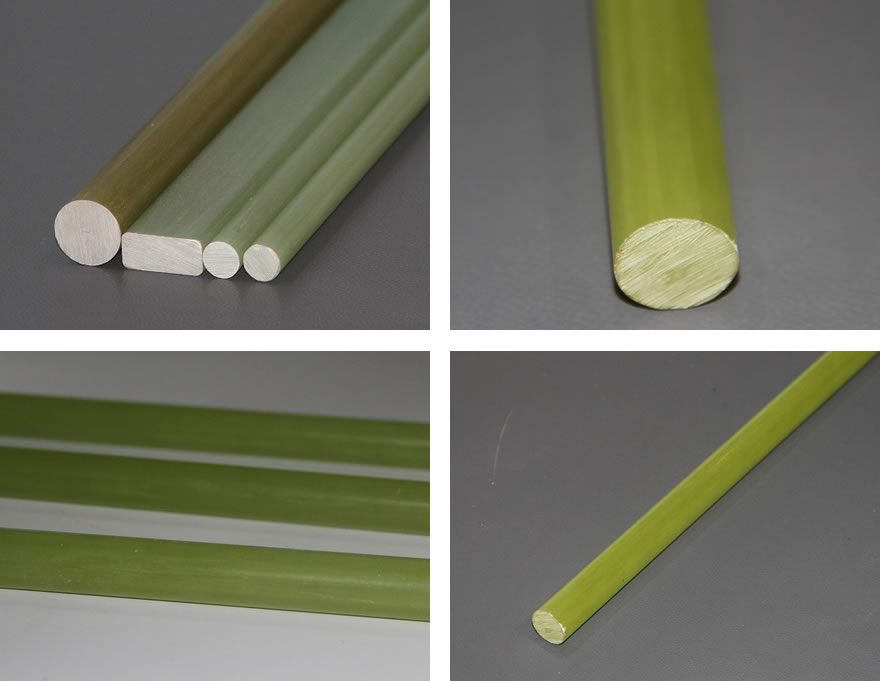
This article provides a systematic analysis of the applications of pultruded epoxy rods in power equipment from the perspectives of material characteristics, typical applications, and selection considerations.
1. Material and Manufacturing Characteristics of Pultruded Epoxy Rods
Pultruded epoxy rods are manufactured using a continuous pultrusion process, in which continuous glass fibers are fully impregnated with an epoxy resin system and cured under controlled heating to form rods with a constant cross-section.
Compared with traditional laminated or molded processes, pultrusion offers the following key advantages:
Continuous fiber reinforcement and high axial strength
Glass fibers are aligned along the axial direction, providing stable and predictable tensile and bending properties.
Dense structure with consistent performance
No layered structure, resulting in fewer internal defects.
High dimensional accuracy, suitable for mass production
Excellent integration of electrical insulation and mechanical strength
These characteristics make pultruded epoxy rods especially suitable for power equipment components that require both load-bearing capability and electrical insulation.
2. Typical Applications of Pultruded Epoxy Rods in Power Equipment
2.1 Medium- and High-Voltage Switchgear
In GIS, circuit breakers, and medium- to high-voltage switchgear, pultruded epoxy rods are commonly used as:
Insulating tie rods
Operating rods
Internal structural insulation components
Their primary function is to transmit mechanical force during operation while maintaining reliable electrical isolation between live parts and operating mechanisms. These components are required to withstand repetitive mechanical stress and electric field exposure over long service periods, where pultruded epoxy rods demonstrate excellent strength retention and insulation stability.
2.2 Transformers and Reactors
In oil-immersed and dry-type transformers, pultruded epoxy rods are widely applied as:
Winding clamping and positioning rods
Internal structural support and insulation members
Their high axial strength effectively resists short-circuit electromagnetic forces, ensuring winding stability under both normal operating and fault conditions, while maintaining reliable electrical and thermal insulation performance.
2.3 Core Rods for Composite Insulators
Pultruded epoxy rods are the most critical load-bearing components in composite insulators, serving as the core rod:
Carrying conductor tension and mechanical loads
Working together with silicone rubber housings to form a complete insulation system
Their resistance to fatigue, aging, and environmental stress is essential for the long-term reliability of outdoor transmission and distribution lines.
2.4 Busbar Systems and Power Distribution Assemblies
In busbar trunks, power distribution panels, and switchboards, pultruded epoxy rods are used as:
Busbar support insulators
Phase separation and positioning components
These applications emphasize dimensional stability and insulation reliability. Pultruded epoxy rods can be customized in diameter and length to meet different voltage levels and structural design requirements.
2.5 Renewable Energy and Special Power Equipment
With the rapid development of renewable energy and energy storage systems, pultruded epoxy rods are increasingly used in:
Wind power and photovoltaic step-up systems
Energy storage power stations
High-voltage components of special power equipment
Their stable performance under temperature fluctuations, vibration, and complex operating conditions provides strong support for long-term equipment safety.
3. Selection Considerations for Pultruded Epoxy Rods in Power Equipment
When selecting pultruded epoxy rods for power equipment, the following factors should be carefully considered:
Glass fiber content and fiber orientation
Epoxy resin system and thermal class
Electrical performance requirements (dielectric strength, withstand voltage, CTI, etc.)
Mechanical property requirements (tensile, bending, compressive strength)
Dimensional tolerances and surface treatment
Compliance with relevant industry and international standards
For critical load-bearing or high-voltage applications, ordinary laminated rods or non-structural plastic materials are not recommended as substitutes.
4. Conclusion
With their high mechanical strength, excellent electrical insulation, and long-term performance stability, pultruded epoxy rods have become indispensable structural insulation materials in modern power equipment. Proper material selection and standardized application play a vital role in improving equipment safety, reliability, and service life.
Leave us a message to get quotation and sample!
If you are interested in our products,, please send us a message and we will contact you as soon as we receive it. Email: info@ztaero.com whatsApp: +8616650273778
Releated News
- 10-13 2026How to Choose DDP Insulation Paper for Oil-Immersed Transformers?
- 10-12 2026FR4 Epoxy Fiberglass Sheets for CNC Machining Factories
- 10-10 2026Transformer Pressboard
- 10-09 2026Epoxy Fiberglass Filament-Wound Tubes for Transformer Core Winding Insulation
- 09-28 2026Transformer Kraft Paper vs. Thermally Upgraded Paper
- 09-28 2026Xujue Electrical Exhibits at Data Centre World Singapore 2026