Machining Green FR4 Epoxy Sheets| Key Processing Techniques and Process Control
The key machining techniques for Green FR4 epoxy sheets, including CNC milling, laser cutting, punching, drilling, tool selection, and process control for high-precision electri...
Machining Green FR4 Epoxy Sheets
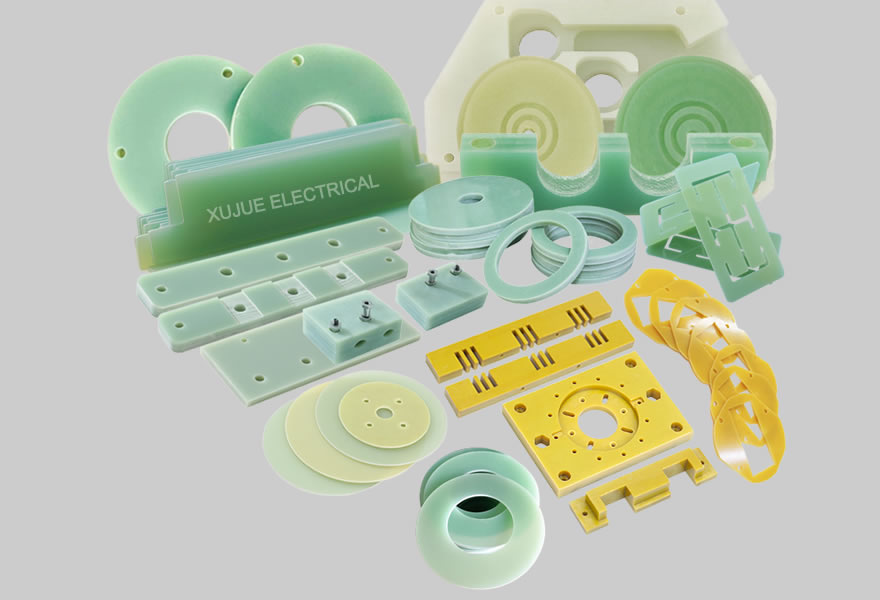
FR4 epoxy sheets are among the most widely used electrical insulation materials in the electronics and electrical industries. Green FR4 epoxy sheets, recognized by their distinctive green color and stable electrical performance, are widely used in precision instruments, communication equipment, and high-frequency electronic applications. This article explores the key machining techniques and process control considerations for green FR4 epoxy sheets.
Characteristics of Green FR4 Epoxy Sheets
The green color of FR4 epoxy sheets is not simply the result of adding dye. Instead, it is achieved through a specially formulated flame-retardant resin system combined with an optimized curing process. The green appearance serves practical purposes beyond aesthetics, allowing easier visual identification, production management, and quality traceability during manufacturing.
From an electrical performance perspective, green FR4 epoxy sheets typically exhibit a dielectric constant (Dk) ranging from 4.2 to 4.8, while the dielectric dissipation factor (Df) remains below 0.02. These electrical characteristics are essential for maintaining reliable high-frequency signal transmission. Across frequencies from 1 MHz to 1 GHz, the electrical properties remain highly stable, making green FR4 an ideal material for communication equipment, precision electronic devices, and industrial control systems.
Green FR4 also meets the UL94 V-0 flame-retardant rating, meaning the material is self-extinguishing within 10 seconds after the ignition source is removed. This level of flame resistance is a fundamental requirement for electronic products that must comply with stringent fire safety regulations.
Core Machining Processes for Cutting
Due to its high mechanical strength and hardness (typically above Mohs hardness 4), green FR4 epoxy sheet cannot be machined effectively using conventional woodworking tools. The industry commonly adopts the following processing methods.
CNC Milling
CNC milling is the most widely used machining process for FR4 epoxy sheets. By utilizing solid carbide or diamond-coated cutting tools, combined with optimized cutting parameters, manufacturers can achieve excellent dimensional accuracy and surface quality.
Typical machining parameters include:
Spindle speed: 800–1,500 rpm
Feed rate: 80–200 mm/min
These values should be adjusted according to sheet thickness, cutter diameter, and machining requirements.
Laser Cutting
Laser cutting is well suited for manufacturing precision holes, intricate contours, and complex geometries. However, because FR4 is a glass fiber-reinforced epoxy composite, localized high temperatures generated during laser cutting may cause slight carbonization along the cut edges, potentially affecting electrical insulation performance.
Therefore, laser-cut components generally require deburring after processing, and electrical insulation testing of the cut edges is recommended for high-reliability applications.
Punching
Punching is an economical solution for high-volume standardized production. When combined with carbide dies, it enables fast, repeatable, and cost-effective manufacturing.
However, punching requires excellent material flatness and consistent sheet thickness. Otherwise, defects such as edge chipping, delamination, or cracking may occur during processing.
Special Considerations for Drilling
Drilling is one of the most common machining operations for FR4 epoxy sheets, especially in PCB manufacturing and electrical insulation components. Due to the composite structure of glass fiber and epoxy resin, drilling requires careful process control.
Drill Bit Selection
The most commonly used drill bits include:
Tungsten carbide drill bits, which offer a good balance between performance and cost and are suitable for hole diameters larger than 0.8 mm.
Diamond-coated drill bits, which provide significantly longer service life and superior performance for high-volume production and micro-hole drilling.
For hole diameters between 0.3 mm and 0.5 mm, diamond-coated drill bits are generally recommended to achieve better hole quality and longer tool life.
Drilling Parameters
Proper coordination of spindle speed, feed rate, and retract speed directly determines the quality of the drilled holes.
Insufficient spindle speed may result in fiber pull-out and burr formation.
Excessive spindle speed can generate excessive heat, causing localized softening of the epoxy resin.
In most applications, spindle speeds between 30,000 and 80,000 rpm are recommended, with adjustments based on hole diameter and material thickness.
Heat Management During Drilling
Heat generation during drilling is often underestimated. Excessive heat accumulation may soften the epoxy matrix, induce glass fiber cracking, and reduce the mechanical and electrical performance of the material.
To minimize thermal damage, manufacturers should use high-quality drilling lubricants or cooling systems whenever appropriate. In addition, drilling operations should be planned to prevent excessive continuous machining on the same workpiece, allowing sufficient cooling time between drilling cycles.
Manufacturer selection
If you are looking for FR4 Epoxy Fiberglass Sheets or Precision Machined Insulation Parts, Xujue Electrical is your trusted manufacturing partner.
With more than 65 years of manufacturing experience, Xujue Electrical specializes in the research, development, production, and precision machining of high-performance electrical insulation materials. Our products are widely used in power transformers, electric motors, new energy systems, electronics, telecommunications, medium- and high-voltage power transmission and distribution equipment, rail transit, and industrial insulation applications.
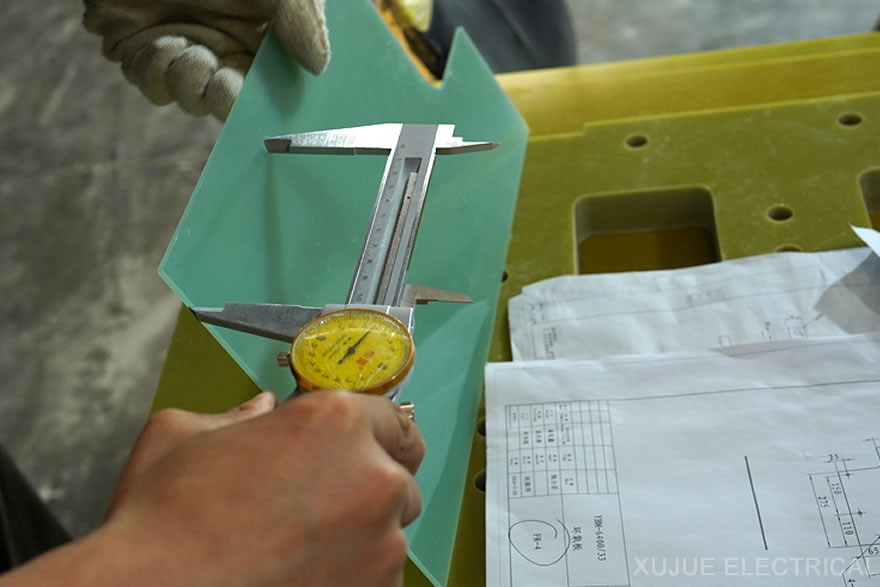
Backed by advanced manufacturing processes and precision CNC machining capabilities, we can manufacture custom FR4 epoxy sheets and machined insulation components according to your drawings, samples, or technical specifications. We offer customized solutions in a wide range of sizes, thicknesses, tolerances, and complex geometries to meet the demanding requirements of various industrial applications.
Simply provide your product drawings, technical specifications, or application requirements, and our experienced engineering team will deliver a one-stop insulation solution, including material selection, structural optimization, machining recommendations, and cost-effective manufacturing solutions.
Before mass production, every product undergoes comprehensive testing for mechanical strength, electrical insulation performance, dimensional accuracy, thermal resistance, and long-term reliability. We also provide free samples for evaluation and testing, ensuring that all products fully meet your performance requirements before full-scale production begins. Our commitment is to deliver safe, reliable, and high-quality insulation solutions that support the long-term success of your projects.
Leave us a message to get quotation and sample!
If you are interested in our products,, please send us a message and we will contact you as soon as we receive it. Email: info@ztaero.com whatsApp: +8616650273778
Releated News
- 10-13 2026How to Choose DDP Insulation Paper for Oil-Immersed Transformers?
- 10-12 2026FR4 Epoxy Fiberglass Sheets for CNC Machining Factories
- 10-10 2026Transformer Pressboard
- 10-09 2026Epoxy Fiberglass Filament-Wound Tubes for Transformer Core Winding Insulation
- 09-28 2026Transformer Kraft Paper vs. Thermally Upgraded Paper
- 09-28 2026Xujue Electrical Exhibits at Data Centre World Singapore 2026