GPO-3 Fiberglass Mat Sheet | UPGM-203 Electrical Insulation
GPO-3 Fiberglass Mat Sheet (UPGM-203) is a high-performance rigid composite insulating material.GPO-3 is primarily used as an insulating structural material in high- and low-vol...
GPO-3 Fiberglass Mat Sheet (UPGM-203)
GPO-3 Fiberglass Mat Sheet (GPO-3 Fiberglass Mat Sheet, internationally commonly referred to as UPGM-203) is a high-performance rigid composite insulating material. It is a rigid sheet insulation material made by impregnating alkali-free glass fiber mat (Glass Mat) with unsaturated polyester resin paste, adding mineral fillers and special additives, and then molding it under high temperature and high pressure.
In the industrial sector, GPO-3 is often referred to as “Red Board” because of its characteristic color, although white and brownish-red versions are also available.
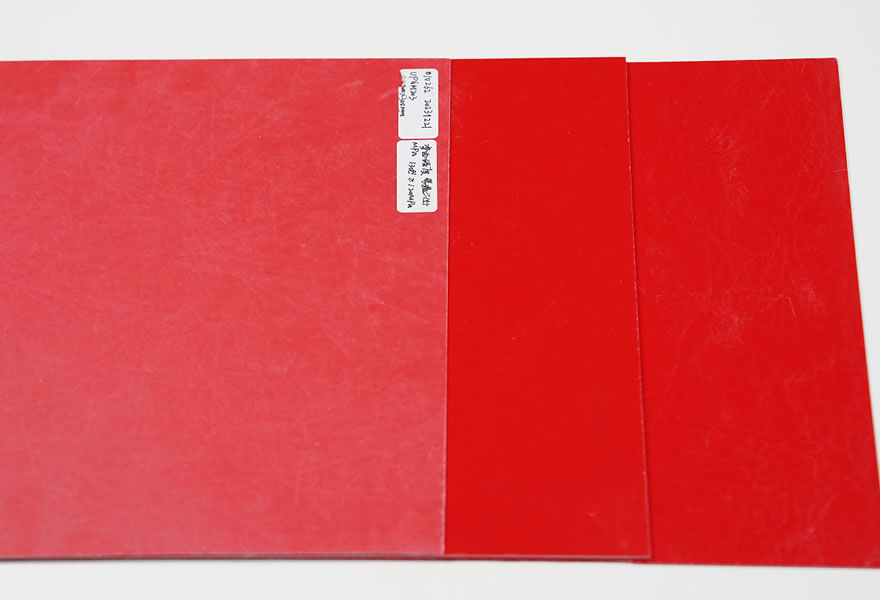
I. Core Performance Characteristics
1. Excellent Electrical Insulation and Arc Resistance
Arc resistance time is > 180 seconds.
Its Comparative Tracking Index (CTI) is typically > 600 V. In harsh environments with high humidity, heavy contamination, or frequent arcing, its surface is less likely to carbonize and form conductive paths, providing excellent resistance to tracking.
2. Excellent Flame Retardancy and Low Smoke Toxicity
It generally complies with the UL 94 V-0 flame-retardant rating and can quickly self-extinguish after being removed from an open flame.
In the event of a fire, it produces very little smoke and generates extremely low-toxicity gases. It is halogen-free, making it particularly suitable for applications with stringent fire-safety requirements, such as rail transit and tunnel environments.
3. High Mechanical Strength and Isotropic Properties
GPO-3 uses randomly oriented glass fiber mat as the reinforcing material, unlike ordinary epoxy boards that use woven glass cloth. This gives GPO-3 isotropic properties, meaning that its mechanical strength is relatively uniform and stable in different directions. It also provides high impact strength and is less likely to crack or delaminate under high loads.
4. Excellent Heat Resistance
The temperature resistance level can typically reach Class F (130°C–155°C), allowing the material to maintain excellent electrical and mechanical properties during long-term operation in high-temperature environments.
5. Easy Machinability
It has good dimensional stability and tight thickness tolerances. It can be processed using standard metalworking equipment, including stamping, drilling, turning, and mechanical shearing. Machined parts are less prone to cracking or breaking.
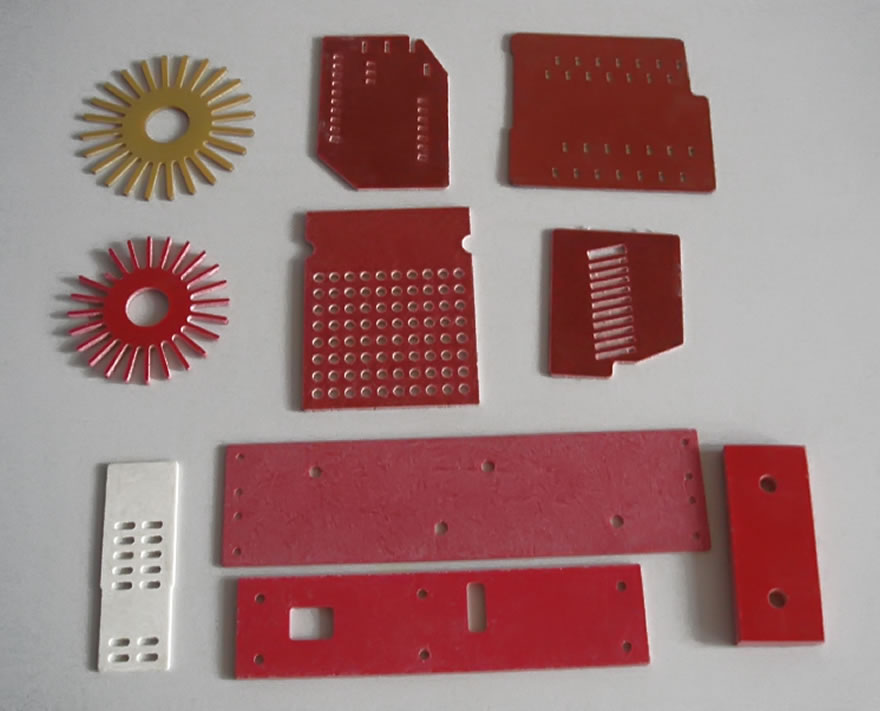
II. Main Applications
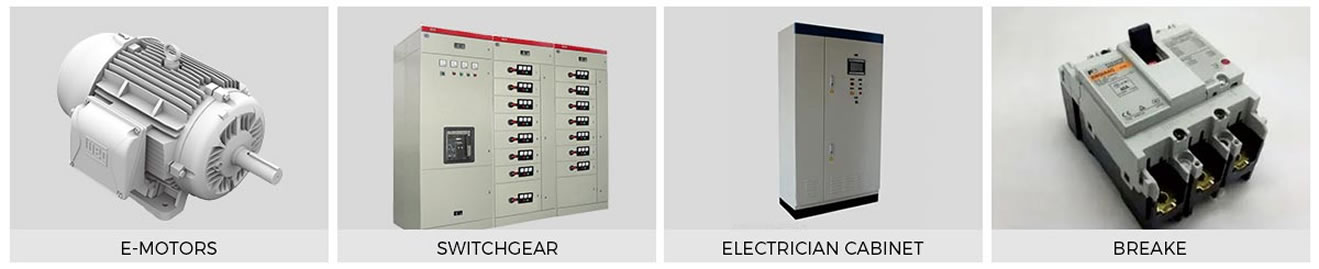
GPO-3 is primarily used as an insulating structural material in high- and low-voltage electrical equipment, power transmission and distribution systems, and rail transit equipment. Specific applications include:
1. Circuit Breakers and Switchgear
In high-power switching equipment where strong currents and potential arcing may occur, GPO-3 is widely used as a key protective insulating barrier.
Air Circuit Breakers (ACB): Safety barriers, protective covers, insulating spacers, and phase barriers.
Molded Case Circuit Breakers (MCCB): Phase barriers, arc-chute insulating barriers, arc chambers, and arc plates.
High- and Low-Voltage Switchgear: Various insulating barriers inside switchgear, including front, rear, top, and bottom insulating panels, lining plates, busbar supports, and busbar clamping components.
2. Busbars and Power Transmission & Distribution Systems
Busbar Supports: Used in transformers and distribution cabinets to fix and support copper or aluminum busbars carrying high currents and prevent phase-to-phase short circuits.
Insulating Supports, Fasteners, and Washers.
3. Motor and Electric Motor Manufacturing
Used for motor armature components, movable covers, stator slot wedges, stator spacers, thin insulating washers, insulating barriers between transformer sections, and other insulating structural components.
4. Rail Transit and New Energy Applications
Rail Transit (Metro and Light Rail): Due to its low-smoke, low-toxicity, and fire-resistant properties, GPO-3 is commonly used for third-rail protective covers (anti-electric-shock barriers), electrical insulating barriers inside railway vehicles, and insulating supports for power distribution equipment in tunnels.
Wind Power and Photovoltaic Inverters: Used as phase barriers and insulating structural components inside high-power converters and inverter cabinets.
5. Other Industrial Applications
Insulating boards for AC contactors, explosion-proof electrical equipment, and other low-voltage electrical components.
Impact-resistant and corrosion-resistant insulating bases for harsh operating environments with high humidity and corrosive conditions, such as metallurgy and chemical processing.
III.Brief Comparison Between GPO-3 and FR-4 (Epoxy sheets)
If your project is considering both materials, the following positioning differences may be useful as a reference:
GPO-3 (Polyester Glass Mat): Excellent arc resistance and tracking resistance, with a lower cost in many applications. It is mainly used for structural insulation in high-voltage and high-current electrical equipment, arc barriers, and busbar supports.
FR-4 epoxy sheet (Epoxy Glass Cloth ): Higher tensile strength and better moisture resistance, but relatively lower arc resistance. It is mainly used for printed circuit boards (PCBs), precision electronic components, and precision insulating parts requiring high tensile strength.
Leave us a message to get quotation and sample!
If you are interested in our products,, please send us a message and we will contact you as soon as we receive it. Email: info@ztaero.com whatsApp: +8616650273778
Releated News
- 09-16 2026GPO-3 Fiberglass Mat Sheet | UPGM-203 Electrical Insulation
- 09-14 2026G7 Silicone Fiberglass Laminate Sheet | Selection Guide & Manufacturer
- 09-11 2026Electrical Laminated Wood in Transformer Insulation Systems
- 09-09 2026Phenolic Laminated Sheets | Grades, Applications & CNC Machining
- 09-08 2026Epoxy fiberglass Sheet Weight Calculation Formula
- 09-07 2026FR4 Epoxy Sheet for CNC Machining: Thickness Selection & Purchasing Guide