Wind Turbine Insulation Materials Selection Guide
Wind Turbine Insulation Materials Selection Guide Appli […]
Wind Turbine Insulation Materials Selection Guide
Applications, Material Types, and Performance Comparison
As the global wind energy industry continues to expand, wind turbines are becoming larger, more powerful, and more demanding in terms of electrical reliability. Insulation materials play a critical role in ensuring the long-term safety, efficiency, and durability of wind turbine systems.
This article provides a comprehensive selection guide for wind turbine insulation materials, covering generator systems, transformers, power converters, and auxiliary electrical components.
1. Why Insulation Materials Are Critical in Wind Turbines
Wind turbines operate under extreme and variable conditions, including:
Continuous vibration and mechanical stress
High voltage and high current loads
Temperature fluctuations from –40°C to +180°C
Humidity, salt fog, and UV exposure (especially offshore wind farms)
To achieve a design lifespan of 20–25 years, insulation materials must deliver excellent electrical, thermal, mechanical, and environmental performance.

2. Main Application Areas of Insulation Materials in Wind Turbines
2.1 Generator Insulation System
The generator is one of the most insulation-intensive components in a wind turbine.
Typical insulation materials include:
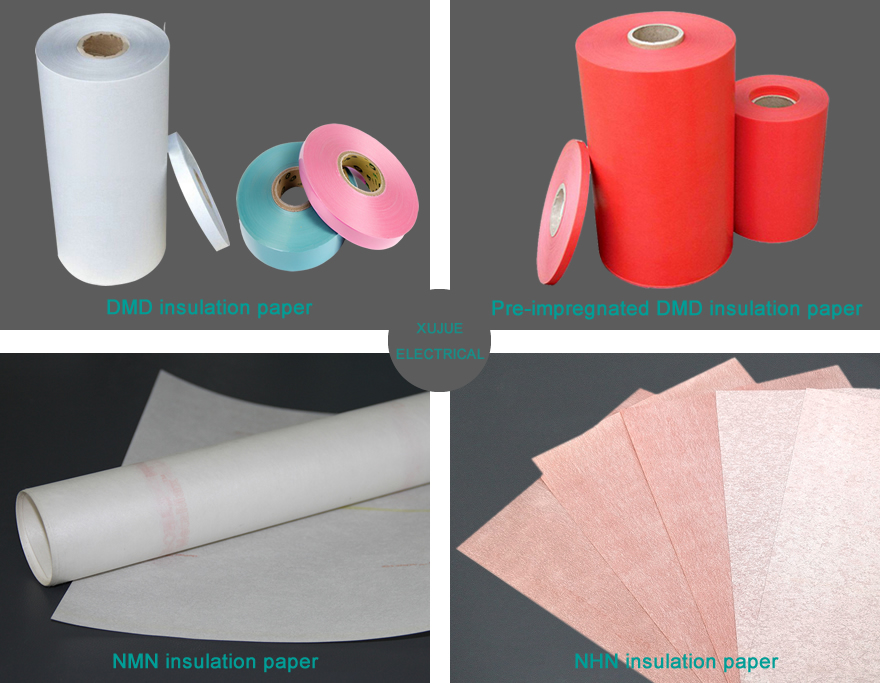
DMD (Polyester Film Composite)
Nomex® insulation paper
Epoxy resin for VPI (Vacuum Pressure Impregnation)
Key requirements:
High dielectric strength
Vibration resistance
Thermal class F or H
2.2 Transformer Insulation (Dry-Type and Oil-Immersed)
Wind turbines commonly use dry-type cast resin transformers, installed either in the nacelle or at the tower base.
Common materials:
Epoxy cast resin systems
Nomex® paper
DMD / NMN insulation sheets
Transformer pressboard (oil-immersed types)
Key requirements:
Flame retardancy
Moisture resistance
Long-term thermal stability
2.3 Power Converter and Inverter Systems
Power electronic systems such as converters and inverters require high-performance rigid insulation materials.
Common materials:
FR4 / G10 / G11 epoxy fiberglass sheets
GPO-3 insulation laminates
SMC / DMC molded insulation parts
Key requirements:
High CTI (Comparative Tracking Index)
Excellent creepage resistance
UL94 V-0 flame retardancy
3. Wind Turbine Insulation Materials Selection Table
| Application Area | Insulation Function | Common Materials | Thermal Class | Key Performance Requirements | Selection Notes |
|---|---|---|---|---|---|
| Generator stator slot | Main insulation | DMD, NMN, NHN, Nomex® | F / H | High dielectric strength, vibration resistance | Offshore turbines prefer H-class |
| Generator inter-turn | Turn-to-turn insulation | Polyester film, Nomex® | F / H | Flexibility, heat aging resistance | Compatible with VPI systems |
| Generator overall insulation | Coil reinforcement | Epoxy resin (VPI) | H | Low shrinkage, crack resistance | Solvent-free systems recommended |
| Dry-type transformer | Main insulation | Epoxy cast resin | F / H | Flame retardant, moisture resistant | Suitable for harsh environments |
| Transformer layer insulation | Layer separation | Nomex®, DMD, NMN | F / H | Dimensional stability, dielectric strength | Long service life priority |
| Oil-immersed transformer | Winding insulation | Transformer paper, DDP | A / F | Oil absorption, electrical insulation | Match with insulating oil |
| Converter & inverter | Structural insulation | FR4, G10, G11 | F / H | High CTI, mechanical strength | UL94 V-0 required |
| IGBT module support | Electrical isolation | GPO-3, SMC, DMC | F | Arc resistance, tracking resistance | GPO-3 for complex conditions |
| Busbar insulation | Electrical isolation | Epoxy coating, heat-shrink tubing | F | High voltage endurance | Partial discharge control |
| Cable systems | Cable insulation | XLPE, silicone rubber | F / H | Low-temperature resistance | –40°C performance critical |
| Fire protection systems | Fire insulation | Mica tape | H | Flame retardant, fire resistant | Offshore wind preferred |
| Outdoor HV components | External insulation | Silicone rubber, EPDM | F | UV and salt fog resistance | Mandatory for offshore wind |
4. Key Selection Criteria for Wind Power Insulation Materials
When selecting insulation materials for wind turbines, engineers and procurement teams should focus on:
Thermal class F or H for long-term reliability
High mechanical strength to withstand vibration
Moisture and salt fog resistance, especially offshore
Flame retardancy (UL94 V-0)
Compliance with IEC, UL, and RoHS standards
5. Conclusion
High-quality insulation materials are essential for the safe and efficient operation of modern wind turbines. From generators and transformers to converters and cable systems, proper material selection directly impacts system reliability and service life.
Choosing the right insulation solution helps reduce maintenance costs, improve energy efficiency, and ensure long-term compliance with international standards.
Looking for Wind Turbine Insulation Materials?
If you are sourcing FR4, G10, G11, GPO-3, DMD, NMN, or customized insulation components for wind turbine applications, feel free to contact us for technical support and competitive quotations.
Our engineering team is ready to help you select the most suitable insulation materials for your project.
Leave us a message to get quotation and sample!
If you are interested in our products,, please send us a message and we will contact you as soon as we receive it. Email: info@ztaero.com whatsApp: +8616650273778
Releated News
- 09-17 2026Oil-Immersed Transformer Winding Insulation Paper
- 09-16 2026GPO-3 Fiberglass Mat Sheet | UPGM-203 Electrical Insulation
- 09-14 2026G7 Silicone Fiberglass Laminate Sheet | Selection Guide & Manufacturer
- 09-11 2026Electrical Laminated Wood in Transformer Insulation Systems
- 09-09 2026Phenolic Laminated Sheets | Grades, Applications & CNC Machining
- 09-08 2026Epoxy fiberglass Sheet Weight Calculation Formula