Fiberglass Insulation Tubes Used in Surge Arresters | Selection Guide
The selection of fiberglass insulation tubes for surge arresters should be based on the system voltage level, while comprehensively considering mechanical strength, structural d...
I. Core Selection Principle
The selection of fiberglass insulation tubes for surge arresters should be based on the system voltage level, while comprehensively considering mechanical strength, structural dimensions, service environment, and applicable standards. Continuous filament-wound FRP tubes with low water absorption and high dielectric performance are strongly recommended.
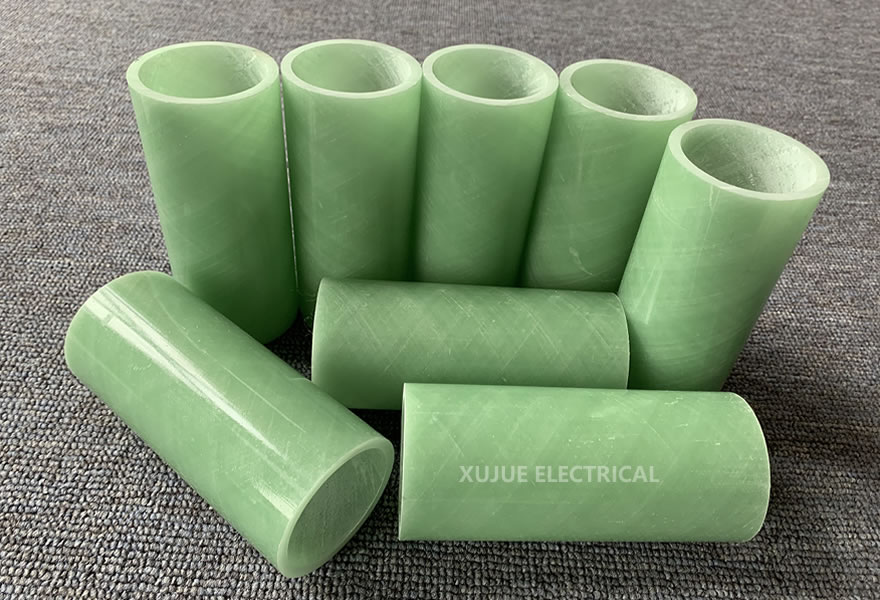
Epoxy Fiberglass Winding Tube
II. Key Selection Parameters (Must Be Confirmed)
System Voltage Level (Primary Criterion)
| System Voltage | Typical Application |
|---|---|
| ≤10 kV | Distribution surge arresters |
| 35 kV | Substations |
| 66 / 110 kV | Transmission systems |
| 220 kV | High-voltage power grids |
| 500 kV | Extra-high voltage systems |
Higher voltage levels require longer tubes, thicker walls, and greater insulation margins.
Mechanical Strength Class (Critical)
Key parameters to be verified:
Axial compressive strength
Bending strength
Tensile strength
| Application Scenario | Recommended Strength Class |
|---|---|
| Conventional substations | Standard strength |
| Transmission line arresters | High strength |
| High wind / seismic areas | Reinforced type |
Line surge arresters require high mechanical strength fiberglass tubes.
Structural Dimension Selection
Key dimensions:
Outer Diameter (OD)
Inner Diameter (ID)
Wall Thickness
Effective Length
Selection principles:
ID ≥ ZnO varistor column diameter + assembly allowance
Wall thickness increases with voltage level and mechanical load
Ensure sufficient strength for end fittings and hardware installation
Electrical Performance Requirements
Typical recommended values:
Volume resistivity: ≥10¹² Ω·cm
Power-frequency withstand voltage: compliant with voltage class
Partial discharge: ≤10 pC
Low dielectric loss and long-term stability
Environmental Condition Selection
| Service Environment | Recommended Configuration |
|---|---|
| High humidity / heavy rain | Low water absorption FRP |
| Coastal salt fog | Corrosion-resistant resin system |
| Industrial pollution | High-density filament-wound tube |
| Cold regions | Low-temperature crack-resistant formulation |
| High-temperature regions | High Tg epoxy resin system |
Materials and Manufacturing Process (Key Point)
Recommended
Continuous fiberglass filament winding process
E-glass or ECR-glass fibers
High-purity epoxy resin systems
Not Recommended
Chopped fiber tubes
Conventional extruded insulation tubes
Recycled resin materials
III. Typical Selection Examples (Reference)
| Project | Selection Approach |
|---|---|
| 110 kV substation surge arrester | Standard-strength FRP tube with conventional wall thickness |
| 110 kV transmission line arrester | Reinforced tube with high bending strength |
| 220 kV coastal project | Salt-fog-resistant, low water absorption resin system |
| 500 kV EHV system | Thick-walled filament-wound tube with high safety margin |
IV. Quick Selection Checklist (For Engineering / Procurement)
System voltage level
Mechanical load requirements
Inner / outer diameter and length
Service environment
Material and manufacturing process
Applicable standards
Leave us a message to get quotation and sample!
If you are interested in our products,, please send us a message and we will contact you as soon as we receive it. Email: info@ztaero.com whatsApp: +8616650273778
Releated News
- 10-13 2026How to Choose DDP Insulation Paper for Oil-Immersed Transformers?
- 10-12 2026FR4 Epoxy Fiberglass Sheets for CNC Machining Factories
- 10-10 2026Transformer Pressboard
- 10-09 2026Epoxy Fiberglass Filament-Wound Tubes for Transformer Core Winding Insulation
- 09-28 2026Transformer Kraft Paper vs. Thermally Upgraded Paper
- 09-28 2026Xujue Electrical Exhibits at Data Centre World Singapore 2026