Dry-Type Transformer Insulation Spacers Revealed
Insulation spacers in dry-type transformers are like the “structural backbone” of the electrical system. They not only support the weight of the windings but also provide insula...
1. The Core Function of Insulation Spacers
Insulation spacers in dry-type transformers are like the “structural backbone” of the electrical system. They not only support the weight of the windings but also provide insulation between components with different voltage levels.
They are typically installed between high-voltage and low-voltage windings, between the core and the windings, and between the windings and the enclosure, forming multiple layers of insulation barriers.
Although these spacers may appear simple, they are actually a critical line of defense for the safe operation of transformers. They must withstand high temperatures (The highest temperatures reaching up to 155°C), resist electrical breakdown (withstanding tens of thousands of volts), and maintain excellent mechanical strength to prevent winding displacement and deformation during operation.
2. Comparison of Three Mainstream Materials
Epoxy Resin Spacers
These spacers can be considered the “all-round performers.” Made from a composite of epoxy resin and glass fiber, they combine the insulation properties of ceramics with the mechanical strength of metals.
Their main advantage lies in their excellent corrosion resistance, making them ideal for humid environments. However, precise molds are required during the manufacturing process.
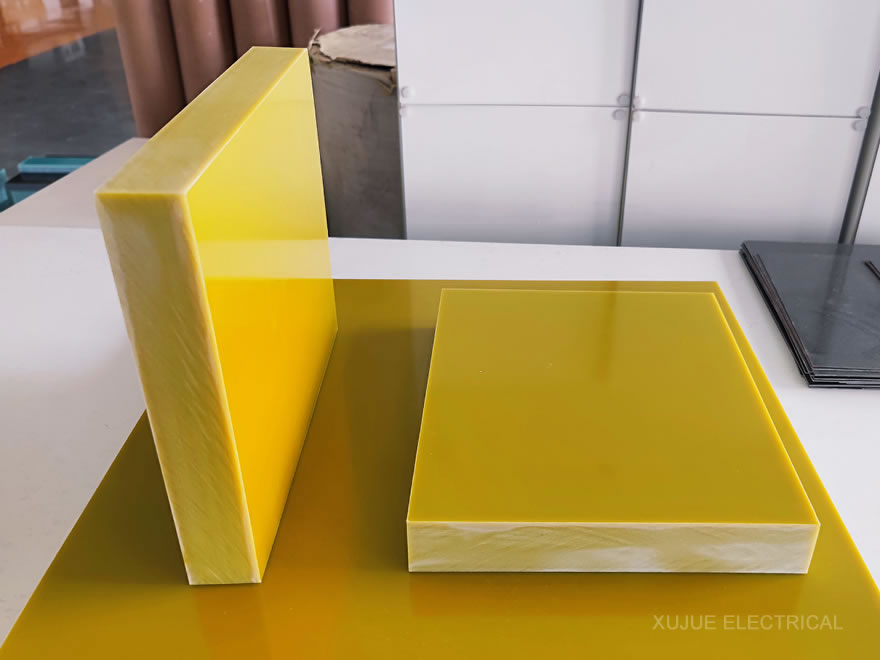
g10 epoxy sheet
Polyester Film Spacers
These spacers are like the “lightweight champions.” Laminated from polyester film, their weight is only one-third of that of traditional materials.
They are especially suitable for small transformers and can effectively reduce transportation costs. However, their heat resistance is relatively weaker, and the recommended long-term operating temperature should not exceed 120°C.
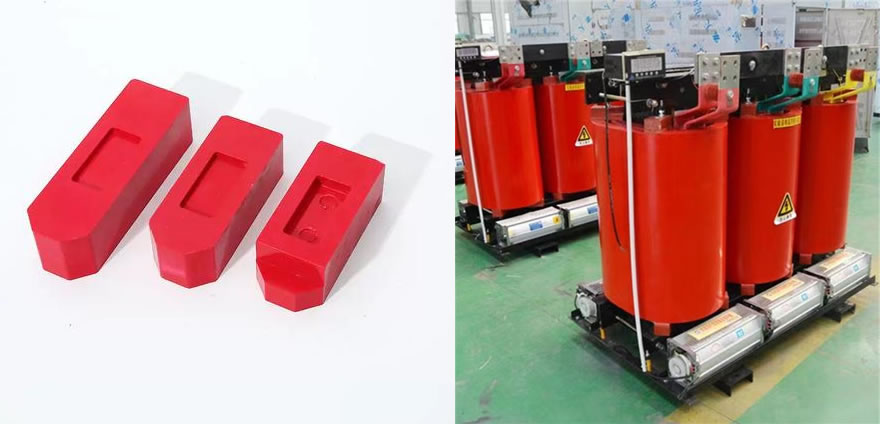
SMC Composite Material Spacers
As an emerging material, SMC (Sheet Molding Compound) spacers combine the advantages of both epoxy resin and polyester.
They maintain excellent insulation performance while achieving precise molding of complex shapes through compression molding technology. Their impact resistance is twice that of traditional materials, making them particularly suitable for applications requiring frequent transportation and handling.
3. Customized Selection for Special Applications
For transformers used in high-altitude areas, spacers with stronger UV resistance are required to prevent material aging caused by prolonged sun exposure.
In corrosive environments such as chemical plants, epoxy resin spacers with superior chemical resistance should be prioritized.
For transformers that require frequent start-stop operations, it is recommended to use spacers with a lower elastic modulus. These materials can better absorb the stress caused by the thermal expansion and contraction of windings, reducing the risk of insulation layer cracking.
Interestingly, some high-end transformers adopt a “sandwich” structure spacer design—using hard materials on the outer layers for structural support and soft materials in the inner layer for vibration cushioning. This design can extend transformer service life by more than 30%.
Leave us a message to get quotation and sample!
If you are interested in our products,, please send us a message and we will contact you as soon as we receive it. Email: info@ztaero.com whatsApp: +8616650273778
Releated News
- 10-12 2026FR4 Epoxy Fiberglass Sheets for CNC Machining Factories
- 10-10 2026Transformer Pressboard
- 10-09 2026Epoxy Fiberglass Filament-Wound Tubes for Transformer Core Winding Insulation
- 09-28 2026Transformer Kraft Paper vs. Thermally Upgraded Paper
- 09-28 2026Xujue Electrical Exhibits at Data Centre World Singapore 2026
- 09-22 2026Xujue Electrical Exhibits at Enlit Asia 2026