Epoxy Insulation Boards for Lithium Battery Packs | FR4 G10 G11 Applications
High-performance epoxy insulation boards for lithium battery packs. Excellent electrical insulation, thermal safety, and mechanical strength for EV and energy storage systems.
Epoxy Boards: Multi-Dimensional Safety Guardians in Lithium Battery Packs
With the rapid development of the new energy vehicle and energy storage industries, the safety, energy density, and service life of lithium battery packs have become core technical challenges.
Thanks to their unique material properties, epoxy resin boards (ERB) have evolved from passive protective components into multi-functional materials integrating insulation, flame retardancy, structural support, and thermal management. They are now indispensable within modern battery packs.
Quick Selection Guide for Lithium Battery Projects
General lithium battery modules / PACK systems
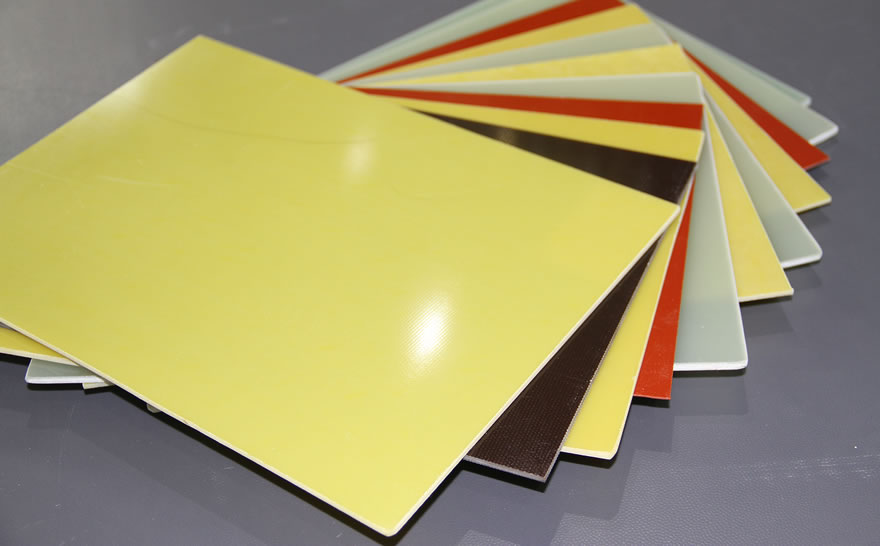
FR4 insulation epoxy sheet (recommended choice)
High mechanical strength with no flame-retardant requirement
G10 insulation epoxy sheet
High-power, high-temperature, or energy storage applications (ESS)
G11 insulation epoxy sheet
This article analyzes epoxy boards from three perspectives: performance advantages, core functions, and innovative applications.
I. Performance Advantages: Five Key Properties as the Technical Foundation
Exceptional Electrical Insulation
Epoxy boards feature a volume resistivity exceeding 10¹⁵ Ω·cm, effectively blocking abnormal current conduction between battery electrodes or within modules.
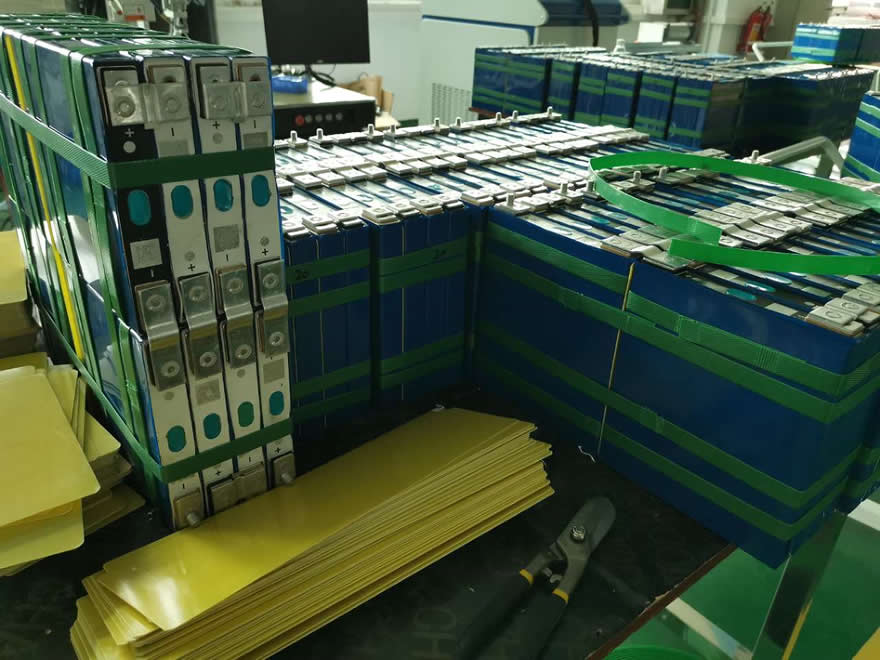
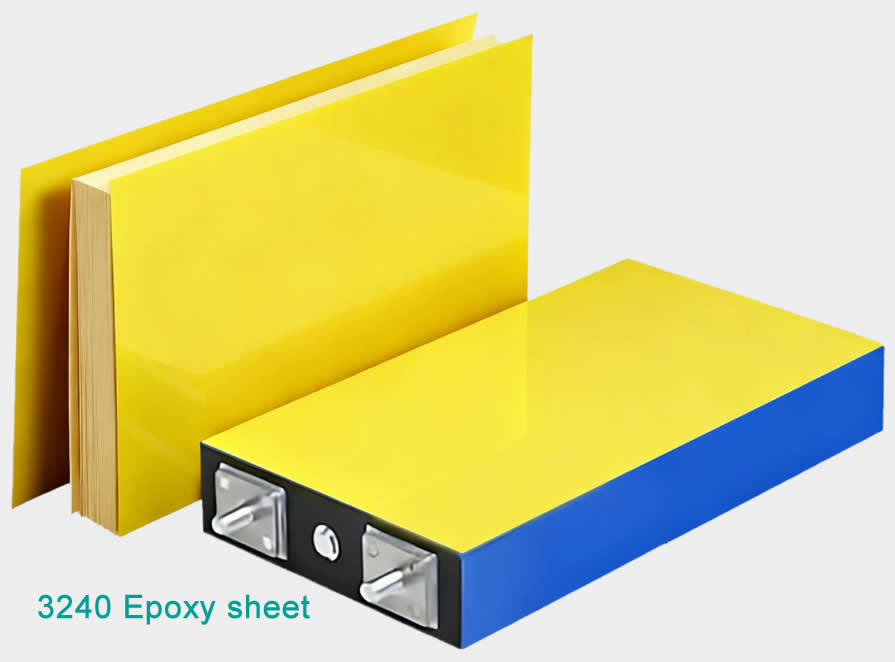
In battery packs, epoxy boards are commonly used as insulating spacers between cells or as protective covers behind BMS boards, preventing short circuits caused by metallic debris or accidental contact.
Active Flame Retardancy and Thermal Runaway Suppression
Under high temperatures, epoxy boards form a carbonized protective layer that isolates oxygen and slows flame propagation. Experimental studies show that:
Battery modules equipped with 2 mm epoxy boards extend thermal runaway propagation time to 2.3 times that of modules without separators;
4 mm epoxy boards can effectively block chain thermal runaway reactions in series-connected modules.
These characteristics significantly enhance battery safety margins under extreme conditions such as nail penetration and overcharging.
High Mechanical Strength and Vibration Resistance
Epoxy boards exhibit flexural strength exceeding 300 MPa, enabling them to absorb vibration and impact during vehicle operation.
In PACK modules, epoxy boards are often used as top protective layers, bolted to the enclosure to prevent deformation of cells caused by external compression or drops. Meanwhile, their low water absorption (<0.1%) ensures dimensional stability in humid environments.
Chemical Inertness and Environmental Resistance
In scenarios involving electrolyte leakage, epoxy boards demonstrate excellent resistance to strong acids and organic solvents, preventing swelling or material degradation.
In energy storage cabinets, epoxy board enclosures can withstand salt spray, humidity, and harsh climatic conditions, ensuring long-term reliability.
Lightweight Design and Spatial Adaptability
With a density of only 1.7–1.9 g/cm³, epoxy boards reduce weight by over 60% compared to metal protective components, contributing directly to higher battery energy density.
Their excellent machinability allows for customized cutouts, enabling precise layouts for sensing boards, wiring, and cooling air channels.
II. Core Functions in Lithium Battery Packs
Thermal Safety Barrier: Blocking Chain Thermal Runaway
Due to their low thermal conductivity (≈0.2 W/m·K), epoxy boards effectively delay heat transfer. Experimental data shows that:
A 4 mm epoxy board can reduce the peak temperature of parallel modules by up to 137°C;
Thermal propagation time can be extended to 5.6 times that of packs without separators.
This delay provides a critical time window for BMS protection strategies to activate.

Structural Integration Medium: Multi-Functional Integration
Cell Fixation: When combined with adhesive PP plates, epoxy boards form a stable structure featuring double-sided cell bonding and rigid top protection.
Electrical Integration: In racing battery packs, epoxy boards directly support busbar welding and embedded sensing board installation, reducing wiring length by more than 30%.
Vibration Damping: Used together with silicone pads and foam materials, epoxy boards help distribute mechanical stress and improve durability.
Maintenance Cost Optimization
Thanks to their anti-aging performance and service life exceeding 10 years, epoxy boards significantly reduce PACK maintenance frequency.
In energy storage systems, epoxy board enclosures prevent corrosion-related sealing failures common in metal housings, thereby lowering total lifecycle replacement costs.
III. Innovative Applications and Future Trends
Smart Top Protective Layers: Next-generation PACK designs embed temperature sensors directly into epoxy board perforations, enabling real-time thermal runaway monitoring.
Lightweight Module Frames: Epoxy boards reinforced with carbon fiber composites offer enhanced specific strength and are being tested for flying vehicle battery systems.
Thermal-Conductive Insulating Integration: Modified epoxy boards filled with boron nitride (laboratory data) achieve thermal conductivity of up to 5 W/m·K while maintaining electrical insulation, addressing heat dissipation challenges in high-rate cells.
Leave us a message to get quotation and sample!
If you are interested in our products,, please send us a message and we will contact you as soon as we receive it. Email: info@ztaero.com whatsApp: +8616650273778
Releated News
- 10-13 2026How to Choose DDP Insulation Paper for Oil-Immersed Transformers?
- 10-12 2026FR4 Epoxy Fiberglass Sheets for CNC Machining Factories
- 10-10 2026Transformer Pressboard
- 10-09 2026Epoxy Fiberglass Filament-Wound Tubes for Transformer Core Winding Insulation
- 09-28 2026Transformer Kraft Paper vs. Thermally Upgraded Paper
- 09-28 2026Xujue Electrical Exhibits at Data Centre World Singapore 2026