DMD Insulation Paper: A Must-Have Motor Insulation Material
DMD is the primary material used for slot insulation (stator slot liners) and phase-to-phase insulation. Every AC induction motor (which accounts for more than 90% of all motors...
In motor manufacturing plants, DMD (also abbreviated as DM) composite insulation material is the most consumed insulation material in terms of both area and weight.
What is DMD?
DMD insulation material is a three-layer flexible composite material consisting of:
Polyester fiber Dacron nonwoven fabric
Polyester Mylar film
Polyester fiber Dacron nonwoven fabric
In other words, it is a Dacron + Mylar + Dacron laminated structure.
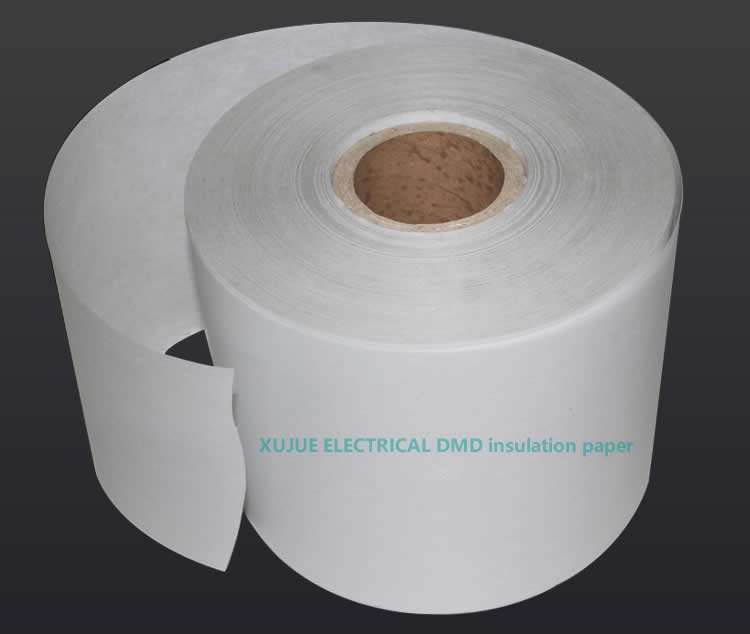
Why DMD Has the Highest Consumption
Core Application
DMD is the primary material used for slot insulation (stator slot liners) and phase-to-phase insulation. Every AC induction motor (which accounts for more than 90% of all motors) requires this material.
Irreplaceability
As long as a motor has a stator core and windings, slot insulation is mandatory to isolate the copper conductors from the iron core and prevent ground faults. DMD is the most economical and reliable standard solution for this purpose.
Standard Material for B–F Class Motors
B-class (130 °C) and F-class (155 °C) motors cover the vast majority of applications, including industrial equipment, household appliances, water pumps, and fans. DMD is the “gold standard” material specifically designed for these temperature classes.
Best Cost Performance
Compared with higher-end NMN (Nomex–Film–Nomex), DMD offers significantly lower cost while fully meeting performance requirements.
The following analysis explains the core characteristics, product forms, and market position of DMD as a “must-have” material from the perspective of motor manufacturers.
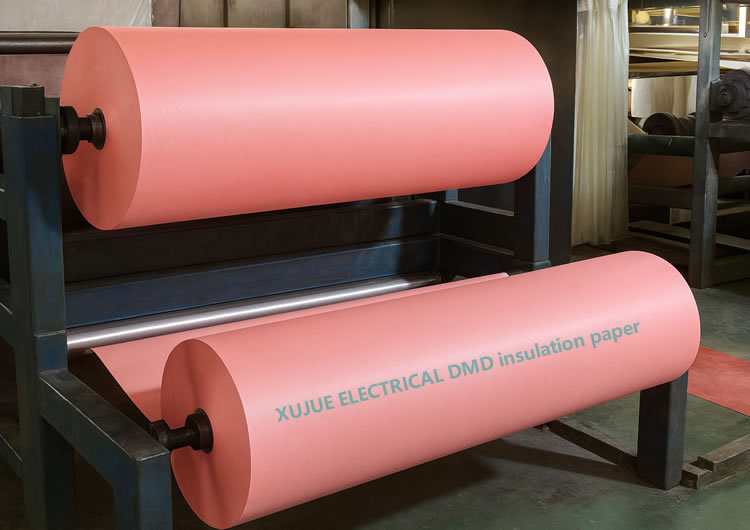
1. Why Is DMD a “Must-Have” Material?
Because it satisfies the most fundamental and universal insulation requirements of motors, achieving the optimal balance between cost efficiency and reliability.
Functional Necessity
Any stator or rotor with windings requires slot insulation to isolate copper conductors from the iron core and prevent ground short circuits. This is the basic physical and electrical safety requirement of motors.
Performance Necessity
B-class (130 °C) and F-class (155 °C) insulation systems cover more than 90% of industrial, household, and commercial motors, such as pumps, fans, compressors, machine tools, and appliance motors. DMD is the standard solution designed precisely for this temperature range.
Cost Necessity
Compared with higher-performance NMN (Nomex-based) materials or pure mica products, DMD provides the lowest overall cost while fully meeting B–F class requirements, making it a key factor in maintaining motor product competitiveness.
2. Core Characteristics of Must-Have DMD Products (Purchasing Criteria)
A qualified and widely accepted DMD product must strictly meet the following requirements:
Accurate Thermal Class
The thermal class must be clearly specified and verified by testing, reaching B class (130 °C) or F class (155 °C). This is the primary basis for material selection.
Stable Dielectric Strength
Breakdown voltage is a critical safety indicator. For example, for 0.25 mm DMD, the breakdown voltage must consistently exceed national standards and internal customer specifications, usually by a significant margin. This represents the bottom line of product quality.
Excellent Mechanical Properties
Tear resistance: The slot liner edges must not tear during coil insertion.
Balanced stiffness and flexibility: Sufficient rigidity for automatic insertion machines, while still conforming closely to slot geometry without gaps.
Puncture resistance: Able to withstand pressure and friction from windings.
Good Process Compatibility
Varnish compatibility: No swelling, delamination, or performance degradation when used with polyester or epoxy varnishes during impregnation and curing.
Dimensional stability: Minimal dimensional change under heat and moisture, preventing insulation failure due to shrinkage.
Consistency and reliability: Minimal batch-to-batch variation, which is essential for large-scale production supply chains.
3. Main Product Forms of Must-Have DMD
DMD products are mainly supplied to motor manufacturers in the following forms:
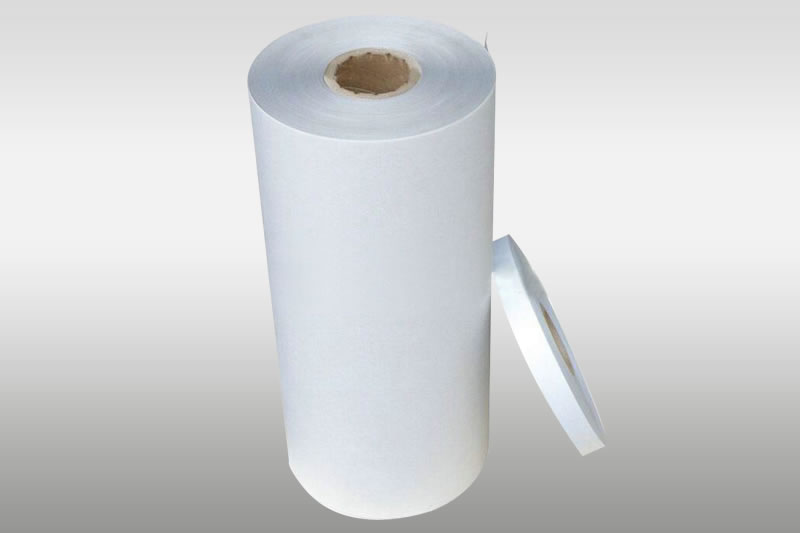
Slit Rolls
This is the largest-volume form. Suppliers produce wide master rolls (e.g., 1 m width) and slit them into various widths according to motor manufacturer requirements, such as 10 mm, 15 mm, 20 mm, etc., matching different stator core lengths.
Application: Used in automated or semi-automated production lines for slot insulation.
Pre-Formed Slot Insulation
For motors with special slot shapes and large production volumes (such as certain household appliance motors), suppliers directly die-cut or punch the insulation into shapes that exactly match the stator slots.
Advantages:
Improves assembly efficiency and ensures consistency. This is a higher-value must-have product form.
Sheets / Cut Pieces
Cut into fixed-size sheets for small-batch production or maintenance markets, and also used for manual fabrication of phase insulation and interlayer insulation.
4. Market Position and Competition of DMD Must-Have Products
Core Market
Small and medium AC induction motors (three-phase and single-phase)
Universal motors (some power tools)
Micro motors
This is the largest motor production segment worldwide.
Main Competitors
Same-level competitors:
Other composite insulation materials, such as DMDM (one additional film layer based on DMD, with slightly better performance), and double-layer DMD (DMD + DMD) for higher requirements.
High-end substitutes:
NMN. When higher temperature rise or reliability is required, NMN is selected. DMD maintains its must-have position because its cost advantage effectively resists NMN substitution.
Low-end challengers:
Low-quality or simplified composite materials. DMD builds its competitive barrier through standardized and reliable performance.
Conclusion
The “must-have” DMD motor insulation material can be defined as:
A flexible composite material using polyester film (M) as the dielectric core and polyester nonwoven fabric (D) as the mechanical reinforcement layers, laminated through reliable manufacturing processes. It must consistently meet B/F class electrical, mechanical, and thermal requirements, and is mainly supplied in slit roll form to efficiently and economically serve the massive demand for slot insulation in general-purpose motors.
Leave us a message to get quotation and sample!
If you are interested in our products,, please send us a message and we will contact you as soon as we receive it. Email: info@ztaero.com whatsApp: +8616650273778
Releated News
- 10-13 2026How to Choose DDP Insulation Paper for Oil-Immersed Transformers?
- 10-12 2026FR4 Epoxy Fiberglass Sheets for CNC Machining Factories
- 10-10 2026Transformer Pressboard
- 10-09 2026Epoxy Fiberglass Filament-Wound Tubes for Transformer Core Winding Insulation
- 09-28 2026Transformer Kraft Paper vs. Thermally Upgraded Paper
- 09-28 2026Xujue Electrical Exhibits at Data Centre World Singapore 2026