Bakelite vs Epoxy sheet: Key Differences and Selection Guide
Choosing between Bakelite (Phenolic) and Epoxy (FR-4/3240) boards? Learn about their core differences in material composition, mechanical strength, heat resistance, and cost to ...
In the fields of electronics, electrical engineering, and mold processing, Bakelite and Epoxy sheets are two of the most common insulating materials. Since they can look similar in certain forms, many buyers and junior engineers often wonder: Which material is the right fit for my specific project?
Today, we will break down the differences between Bakelite and Epoxy sheets across four key dimensions—composition, performance, application, and cost—to help you make the right choice.
1. Material Composition: Paper vs. Glass Fiber
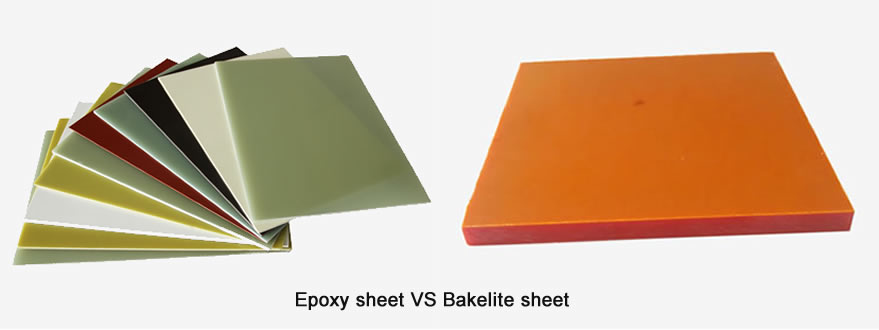
Bakelite (Phenolic Laminate): Technically known as phenolic paper-based laminate. It is made by impregnating bleached wood pulp paper with phenolic resin and hot-pressing it. Named after its inventor, Leo Baekeland, it was the first synthetic plastic in history.
Epoxy Board (Epoxy Glass Fiber Laminate): Commonly referred by grades like FR-4 or 3240. It consists of electronic-grade glass fiber cloth impregnated with epoxy resin and processed under high temperature and pressure.
Core Difference: Bakelite uses paper as a base, while Epoxy sheets use glass fiber. This fundamental difference leads to a massive gap in physical strength.
2. Performance Comparison: Which One Wins?
Mechanical Strength:
Epoxy sheets are incredibly strong and impact-resistant due to the glass fiber reinforcement. Bakelite, conversely, is relatively brittle and prone to cracking or chipping under heavy physical stress.
Insulation & Moisture Resistance:
Bakelite performs well in dry conditions but absorbs moisture easily, which significantly degrades its insulation resistance in humid environments. Epoxy sheets have extremely low water absorption, maintaining excellent electrical properties even in high-humidity settings.
Temperature Resistance:
The long-term operating temperature for Bakelite is typically around 100-120°C. Epoxy sheets (especially FR-4) can withstand 130-150°C or higher, offering superior thermal stability.
3. Typical Applications
Best Uses for Bakelite:
Ideal for projects where mechanical stress is low and the environment is dry. Common uses include distribution box partitions, fixture base plates, switch components, mold jigs, and insulation gaskets for low-end electronics. Its main advantages are easy machinability and low cost.
Best Uses for Epoxy sheets:
Designed for high-precision and high-requirement environments. Common uses include PCB substrates, motor insulation parts, transformer skeletons, high-voltage switchgear, and structural parts requiring precision machining.
4. Cost and Value: Finding the Balance
In terms of pricing, Bakelite has a clear price advantage, often costing half as much as (or even less than) Epoxy sheets. If your project only requires basic insulation and is on a tight budget, Bakelite is the cost-effective choice. However, if you need long-term stability, high strength, and extreme environmental adaptability, the slightly higher upfront cost of Epoxy sheets will save you more in maintenance and reliability.
Summary
The difference boils down to this: Choose Bakelite for economy and simplicity; choose Epoxy sheets for high performance and reliability.
When selecting, always consider your product’s working environment (temperature, humidity) and mechanical load. If you’re still unsure, consult a professional material supplier for a customized recommendation.
Leave us a message to get quotation and sample!
If you are interested in our products,, please send us a message and we will contact you as soon as we receive it. Email: info@ztaero.com whatsApp: +8616650273778
Releated News
- 10-13 2026How to Choose DDP Insulation Paper for Oil-Immersed Transformers?
- 10-12 2026FR4 Epoxy Fiberglass Sheets for CNC Machining Factories
- 10-10 2026Transformer Pressboard
- 10-09 2026Epoxy Fiberglass Filament-Wound Tubes for Transformer Core Winding Insulation
- 09-28 2026Transformer Kraft Paper vs. Thermally Upgraded Paper
- 09-28 2026Xujue Electrical Exhibits at Data Centre World Singapore 2026